April 2026 Newsletter
As novel serotonergic compounds move farther into regulatory processes, it’s important to understand what makes a drug psychedelic versus just active in the brain. In this month’s SISS, we talk terminology and how commonly used measures can help differentiate these effects.
Science in Sixty Seconds
Defining Psychoactive versus Psychedelic
Why can we feel the effects of some drugs but not others? Why do some substances produce highly discernible phenomena, like most serotonergic agonists, but not others?
The differences in drug effects on both the mind and body can be attributed to their psychopharmacology. For example, it’s understood that 5-HT2A receptor activation in the frontal cortex is necessary but not sufficient to get psychedelic effects. The term psychedelic didn’t just come out of nowhere; it has a rich linguistic history (See Figure 1).
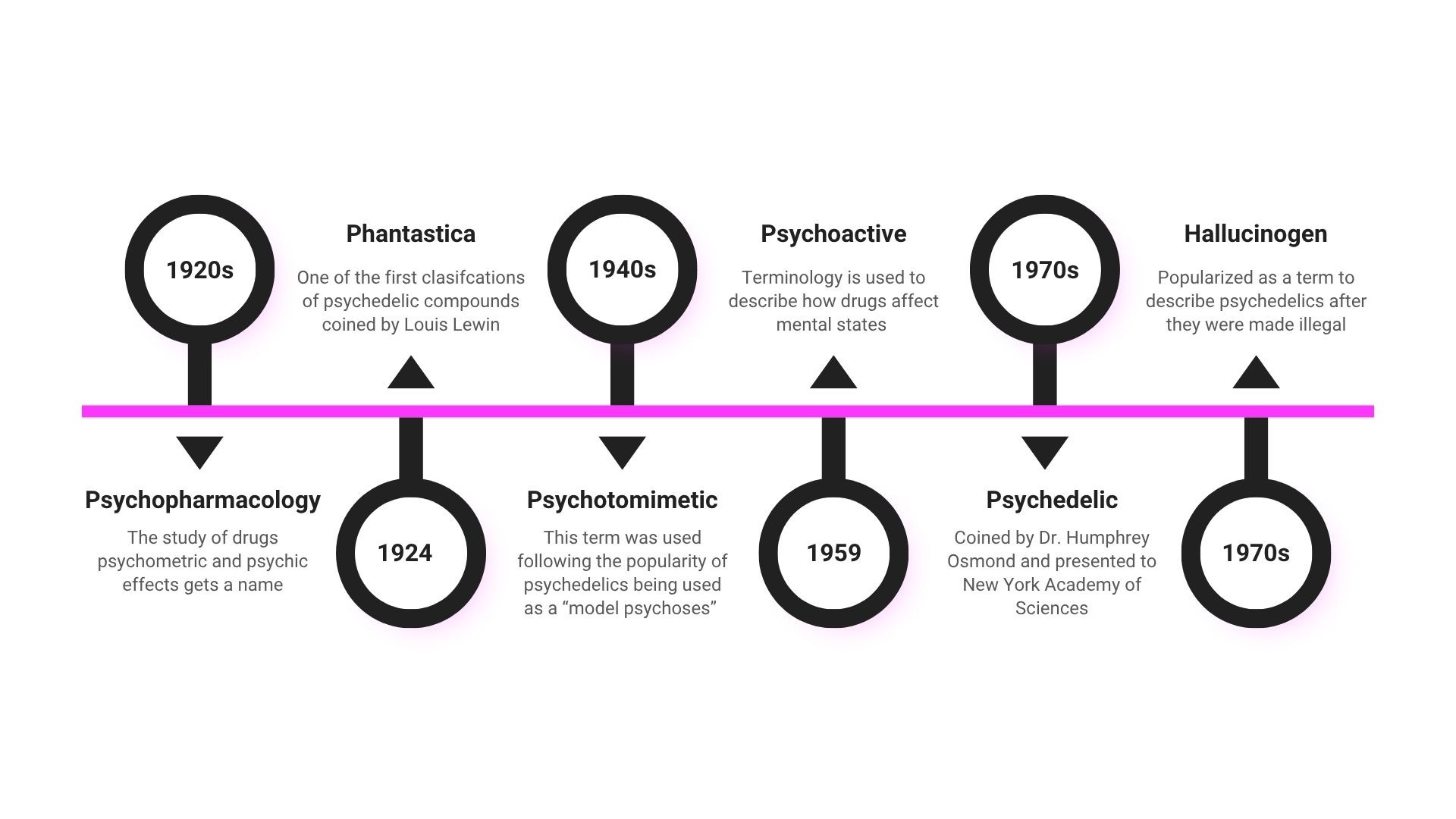
While substances often get classified using terminology that describes the broad effects of the drug on the central nervous system (CNS) or psychophysiological effects – stimulants, depressants, dissociatives, hallucinogens – all of them can be described as psychoactive. This is a broad term used to describe any acute psychophysiological changes following drug administration through activation of the central nervous system (CNS) and would include over-the-counter drugs like cough suppressants and antihistamines, or legal recreational substances like alcohol and caffeine.
Many drugs are psychoactive without having psychedelic effects.
The case for psychoactivity: Antidepressants
Commonly prescribed selective serotonin-reuptake inhibitors (SSRIs) like sertraline, citalopram, and fluoxetine produce changes that could be identified as psychoactive but are not long-lasting or deemed a risk of abuse and, therefore, can be administered without medical supervision. These substances are typically reported to have moderate subjective effects related to:
- Dizziness or fatigue
- Restlessness
- Sweating
- Nausea
- Tremors
- Dry mouth
- Anxiety
In a double-blind multicenter trial in outpatients with Major Depressive Disorder (MDD), sertraline and placebo were measured in multiple subjective scales. In the sertraline treated group, 59% reported somatic side effects (nausea, sweating, dizziness, etc.) indicating drug activity (Olie & Katz, 1997). In behavioral effects studies, sertraline did not produce positive subjective effects like euphoria or drug-liking (Zawertailo et al. 1995).
Measures of Psychedelic Activity
Psychedelic refers to a specific and unique subset of psychophysiological changes induced by certain classes of substances including some serotonergic agonists, like psilocybin or LSD. Other substances like MDMA and ketamine, which differ in their mechanisms of action from serotonergic agonists, can also produce psychedelic-like effects. It’s important to note that substances that produce psychedelic effects will also likely produce somatic effects like other substances.
Psychedelic effects are typically characterized clinically through a questionnaire that allows the patient to identify acute changes in perception, sensory experience and other bodily changes (Yaden et al. 2024). Some of these include the Mystical Experiences Questionnaire (MEQ; MacLean et al. 2012) or the 3- or 5-Dimensional Altered States of Consciousness Rating Scale (3D- or 5D-ASC). Substances that produce psychedelic effects usually have higher scores on questions related to:
- Euphoria / ecstasy
- Visual or auditory hallucinations
- Synesthesia
- Changes in Sense of time
- Dissociation
- De-realization/De-personalization
- Alterations in consciousness
The Visual Analog Scale
In most clinical trials assessing novel treatments, a visual analog scale (VAS) is used to assess psychoactive effects. There are several different VAS questionnaires, sometimes just referred to as “VAS” but specifically tailored from a more standardized questionnaire that make sense for that study. Some examples are the Drug Effects Questionnaire and Peak Experience Scale (Hovmand et al. 2023).
The first few questions are that these scales typically measure strength of perceived drug effect, not type of experience, therefore no universally accepted VAS cutoff score exists that defines a drug effect as psychedelic.
These allow the participant to rate their own subjective experience through questions regarding “any drug effect,” “good drug effect,” and “bad drug effect.” A healthy-subject safety pharmacology study assessing MDMA found all three ratings were increased in comparison to placebo, highlighting the highly variable subjective experience (Vizeli & Liechti, 2017). This suggests feeling the drug isn’t necessarily the same as euphoric or positive outcomes
Typical VAS ranges for “total drug effect” across various substances can be seen below in Figure 2. Data was comprised from various studies including: Krystal et al. 1994; Hasler et al. 2004; Mitchell et al. 2021; Raison et al. 2023; Dolder et al. 2017; Morean et al. 2013; Burns et al. 2014)
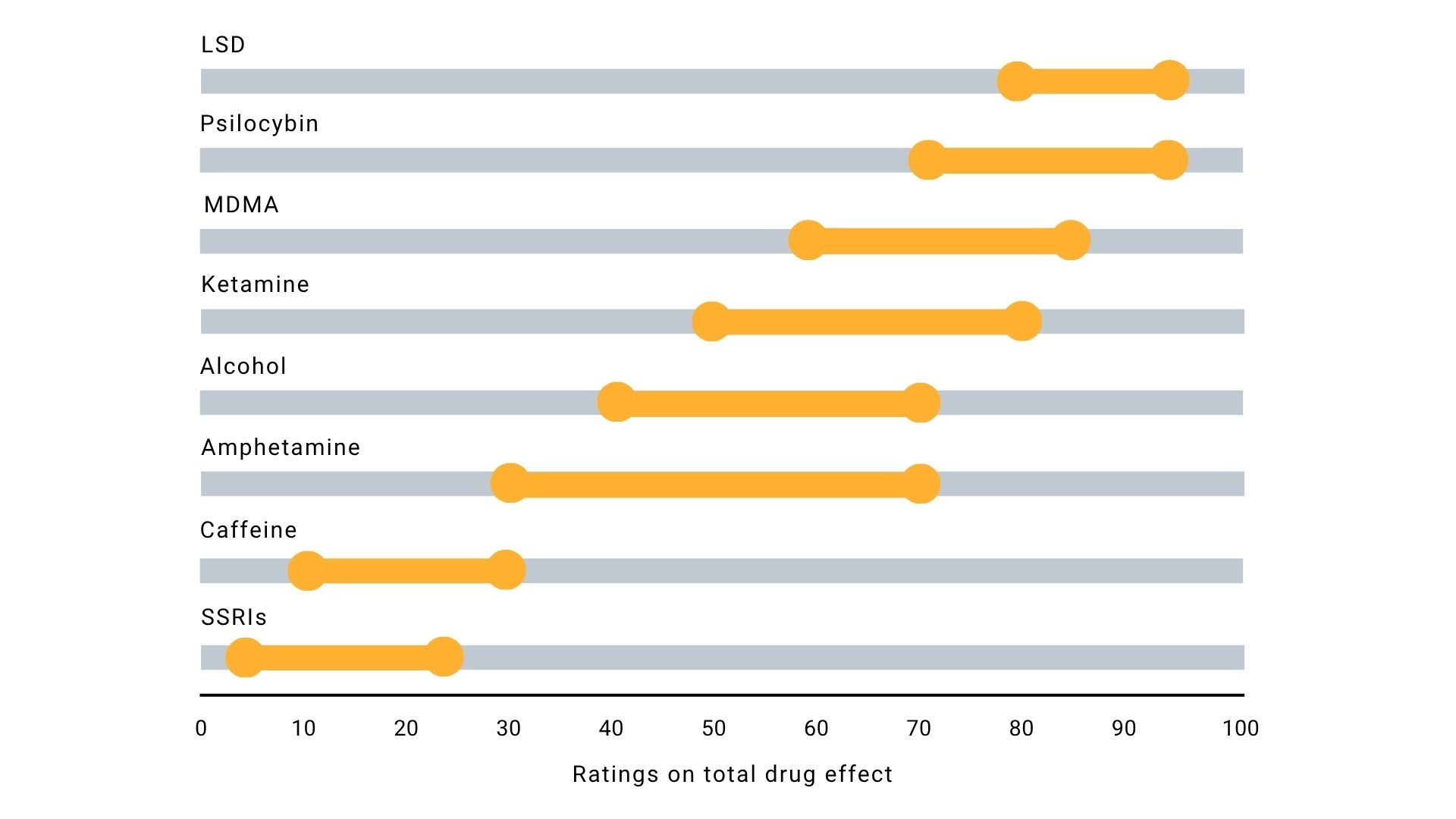
While psychedelics trend on the higher end of the range, some substances overlap without having similar subjective experiences. However, there is typically an overlap in ratings of euphoric effects which can be produced by a majority of psychoactive substances. MDMA for example, produces high ratings of euphoric effects while SSRIs produce low ratings. While commonly prescribed SSRIs produce somatic changes, their VAS drug-effect scores remain relatively low.
Many drugs can produce high VAS “drug effect” scores, but the way substances alter a person’s perception, consciousness, sense of self, and relationship with the world (known as drug phenomenology) differs. That’s why there is the need for multi-item altered-state scales specific to the type of phenomenology that is hypothesized to be observed. Using scales like the MEQ, 5- or 3-ASC, it is possible to measure domains related to psychedelic effects like unity, transcendence or space/time, ineffability and positive mood. A complete mystical experience is often defined when ≥60% of the maximum score in all domains is recorded.
The golden rule: While many drugs are psychoactive not all psychoactive drugs are psychedelic.
At Xylo Bio, our team of expert clinical advisors – including leaders in profiling psychoactive compounds like Drs’ John Harrison, Matthias Liechti and John Krystal – are helping us determine the right scales to tease apart psychoactive, hallucinogenic and therapeutic effects as we move to clinical development.
To learn more about our pipelines and our team, visit xylo.bio.
XYLO BIO UPDATES:
Scientific Leadership
We want to highlight two incredible members of our scientific team from Dr. Nick Everett’s Lab at University of Sydney:
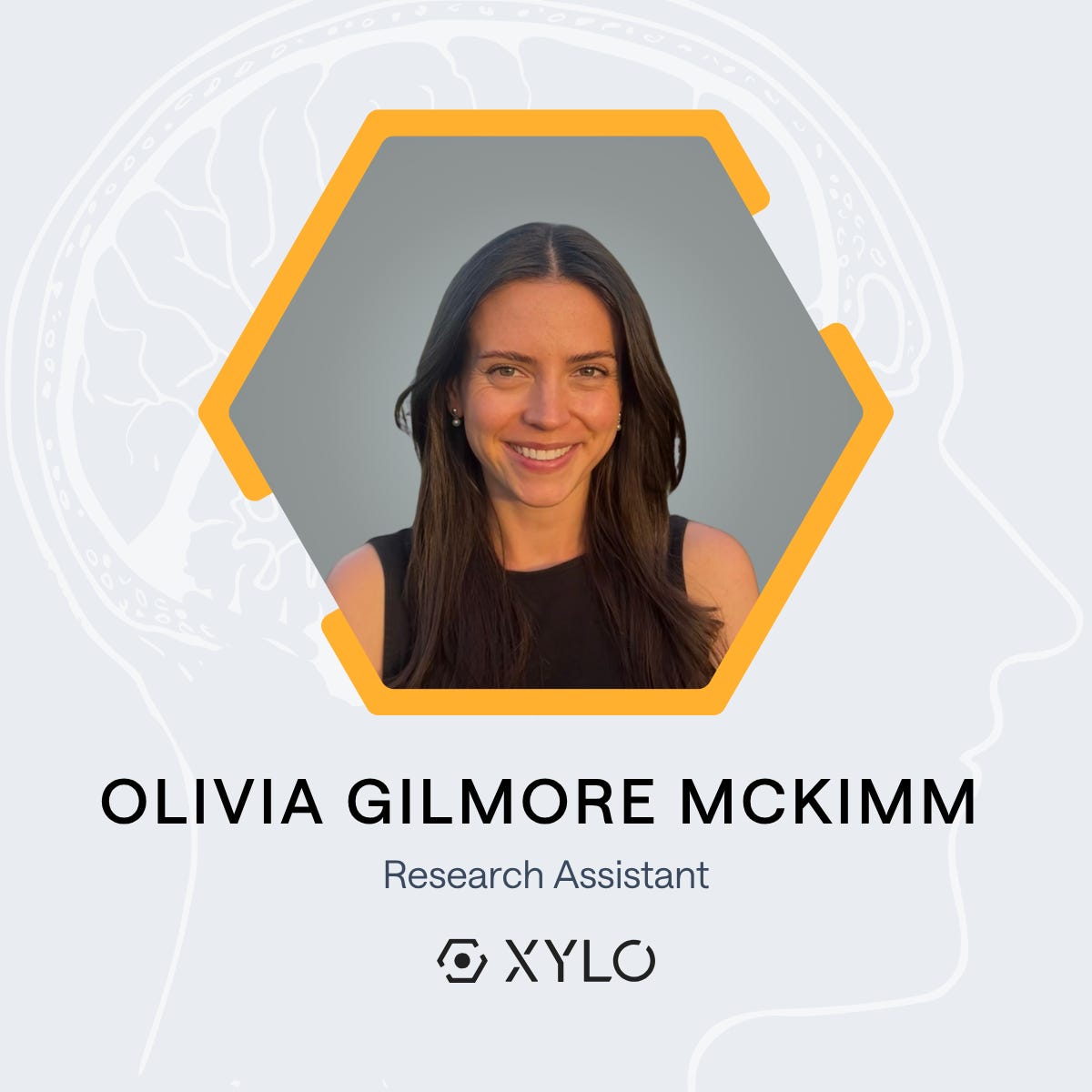
- Olivia Gilmore McKimm is a research assistant that will be starting her PhD this October in Dr. Everett’s lab. Olivia has a Bachelor of Psychology Honours which focused on methamphetamine, cognitive flexibility and psilocybin. She’s spent the last year refining the preclinical qEEG pipeline, which has been used to profile psilocybin and XYL-1001, our lead candidate. Olivia has been instrumental in moving this compound forward. Read more about her work with Xylo here.
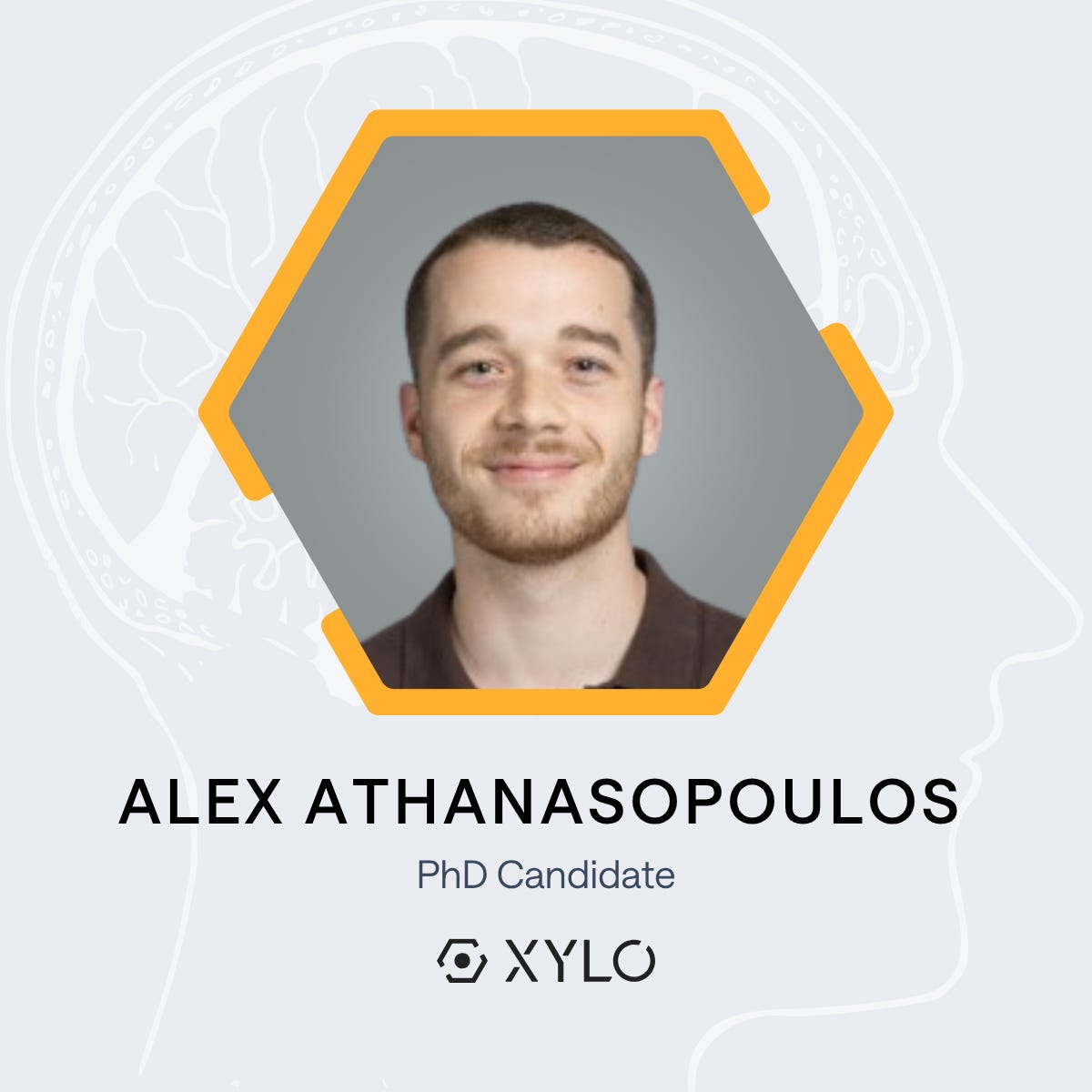
- Alex Athanasopoulos is a second year PhD candidate in Dr. Everett’s lab. Alex has a Bachelor of Psychology Honours with a minor in medicinal chemistry. As a PhD candidate, his dissertation research will focus on investigating psilocybin and novel serotonergic therapeutics as potential treatments for methamphetamine addiction using preclinical models of addiction. He has been an asset to Xylo Bio by characterizing our compounds in models of substance use disorders. See the full feature here.
Collaborations and Thought Leadership
Samantha Rector (VP of Business Development) recently attended and presented at a variety of conferences focused on biotech, drug development and neuroscience including:
- The first annual European Sachs Neuroscience Innovation Forum which focused on drug and tech innovation in Europe and the latest global developments in CNS.
- The Octane Neurotech Forum where she presented on the “Innovators, Investors, Strategics Relationships” Panel.
- The Asilomar for the Brain and Mind where she co-led a workshop focused on neuroethics, investor-founder frameworks and neurotherapeutics.
In Xylo Bio’s recent Targeted Neuro Talks, Dr. Sam Banister chatted about the curious phenomena of anesthesia dreams with Dr. Harrison Chow:
Coming Up:
Find members of the Xylo Bio team traveling around the globe in the coming months:
- MUSC Beyond the Lab Event (Charleston, South Carolina, April 22 - 24) - Dr. Alaina Jaster (Head of Comms) will be visiting colleagues and giving a keynote on science communication.
- Xylo Bio Labs Visit (Sydney, Australia, April 27 - May 1) - Dr. Sam Banister (CSO) will be visiting the Xylo Bio labs in Sydney and catching up with the Research & Development team.
- UW-Madison Commencement (Madison, Wisconsin, May 7) - Samantha Rector will be giving the Keynote for the UW-Madison School of Pharmacy Graduate Studies Program Commencement.
- ASPET Annual Meeting (Minneapolis, Minnesota, May 17- 20) - Dr. Sam Banister will be presenting on a panel titled “Neural, Immune, and Behavioral Interactions of Psychedelics and Stress”
Photos

RESEARCH UPDATES: Science Shaping the Future of Neurotherapeutics
This month’s emerging literature demonstrates the same principles driving Xylo’s strategy: mechanism-guided design, rigorous biological investigation and clinically scalable innovation.
Preclinical Research
- Serotonergic agonism involved in some neural-immune interactions | This study found that activation of 5-HT2A receptors with the psychedelic DOI reduced hippocampal neuroinflammation, including decreases in key pro-inflammatory markers such as cytokine signaling (e.g., IL-1β, TNF-α) following an immune challenge. DOI pretreatment also improved associated behavioral and cognitive deficits, indicating a protective effect on brain function. BMC Neuroscience.
- Inflammatory mechanisms related to suppression of epigenetic serotonin in alcohol binge drinking model | Using a model of adolescent binge drinking in mice, researchers found that drinking suppresses serotonin neuron function through epigenetic and neuroinflammatory mechanisms, leading to lasting behavioral impairments such as social deficits. These changes were reversible with interventions that reduce inflammation, such as exercise or treatment with glycyrrhizic acid, suggesting potential therapeutic strategies to restore serotonergic signaling after early-life alcohol exposure. J. Neuroscience.
- Rational design and evaluation of psilocin derivatives to limit hallucinations | This study developed fluorinated N-alkyl carbamate derivatives of psilocin to reduce its hallucinogenic effects while preserving therapeutic potential. A lead compound showed good oral bioavailability, brain penetration, and partial conversion to psilocin, while directly activating 5-HT2A/2C receptors with attenuated psychoactive effects, demonstrating a strategy to fine-tune serotonergic signaling rather than relying on inactive prodrugs. J. Med. Chem.
- Evidence of endogenous DMT formation in rat brain | This study aimed to understand whether DMT is naturally occurring in the brain. Researchers found that while DMT rapidly enters the brain, it’s quickly broken down and cleared, with little long-term retention. Importantly, they found no detectable evidence of endogenous DMT pool in the adult rat brain, and little support for the idea that DMT is stored in serotonin neurons.Neuropharmacology.
- Serotonin activity profiling of 5-MeO-tryptamines | This study examined how adding an N-benzyl group to tryptamines affects activity at the 5-HT2A receptor, using assays that measure different signaling pathways. The results showed that these compounds preferentially activated β-arrestin signaling over Gq pathways, indicating biased agonism that depends on specific chemical substitutions. ACS Chem. Neurosci.
Clinical Research
- EEG-based models may help understand individual responses to treatment | This study (N=76) developed a machine learning framework using EEG data to predict individual responses to depression treatments before therapy begins. It found that different brain signal representations best predict outcomes depending on the treatment type, achieving high accuracy and revealing distinct brain-region patterns linked to each therapy. These results suggest EEG-based models could help guide personalized treatment selection and reduce trial-and-error in depression care. Brain Sci.
- Trauma-related memories may predict specific clusters of PTSD vs. depression symptoms | This study analyzed data from trauma-exposed children and adolescents (N= 1,400) and found that trauma-related memory features are closely linked to PTSD symptoms but not to depression. PTSD, depression, and memory characteristics formed largely separate clusters, suggesting that trauma memory may not explain why these conditions co-occur. Eur J Psychotraumatol.
- Sex plays a role in psychiatric comorbidities | This large national study (N=58,050) found that sex differences shape psychiatric comorbidities in substance use disorders, with females more likely to have anxiety, depression, bipolar, and trauma-related disorders across opioid, alcohol, and cannabis dependence. In contrast, males showed higher odds of psychotic disorders in opioid and cannabis dependence. These findings highlight the need for sex-informed, personalized approaches to treating substance use and co-occurring mental health conditions.Am. J. Psychiatry.
- Psilocybin directly compared to Nicotine Patch in Smoking Cessation Trial | A pilot randomized clinical trial compared the efficacy of psilocybin versus a nicotine patch (N=82) when paired with cognitive behavioral therapy. They found that about 40% of psilocybin-treated participants remained abstinent after 6 months compared to about 10% in the nicotine patch group. JAMA Netw Open.
- Phenomenological overlap of psychedelics and psychosis | Psychedelics were historically used to understand or “mimic” psychosis, but not many studies exist directly comparing first-person accounts of psychedelic experiences and psychotic episodes. Participants generally described psychedelic states as more structured, transient, and often positively valenced, whereas psychosis was characterized by greater distress, loss of agency, and impaired reality testing. These findings challenge the validity of psychedelics as straightforward models of psychosis Int J Ment Health Addiction.
Editorials and Reviews
- Psychedelic Therapy vs Antidepressants for the Treatment of Depression Under Equal Unblinding Conditions | This systematic review and meta-analysis assessed how psychedelic-assisted therapy compared with open-label traditional antidepressants in the treatment of depression. The findings suggest no statistically significant difference in patient improvement across the two treatments, suggesting differences in trial design and blinding integrity may have an impact on results JAMA Psychiatry.
- Depression clinical trials worldwide: a systematic analysis of the ICTRP and comparison with ClinicalTrials.gov | This review analyzed trends in depression clinical trials worldwide over time. The authors found that many trials still face limitations – such as variability in methods and underrepresentation of certain groups – which can affect how well results translate to real-world patients. Overall, the paper emphasizes the need for more standardized, inclusive, and rigorously designed studies to improve the development and evaluation of new antidepressant treatments. Transl Psychiatry.
- Cardiac Consequences Associated with Psychedelic Use: A Systematic Review of Lysergic Acid Diethylamide, 3,4-Methylenedioxymethamphetamine, and 5-Hydroxytryptamine 2B-Mediated Valvular Heart Disease | This systematic review examined whether serotonergic psychedelics may contribute to valvular heart disease through activation of the 5-HT2B receptor, a pathway known to drive cardiac valve remodeling. The authors found that while this mechanism is biologically plausible, current evidence linking typical psychedelic use to clinically significant heart valve disease is limited and not yet conclusive, highlighting the need for further long-term safety studies.Pharmacopsychiatry.
- The role of 5-HT3 receptors in schizophrenia and associated depressive and addictive comorbidities | This review focuses on the 5-HT3 receptor as a key modulatory hub in schizophrenia, influencing dopamine signaling, cortical balance, and neuroinflammatory pathways rather than acting as a traditional antipsychotic target. Evidence suggests that 5-HT3 antagonists may modestly improve negative and depressive symptoms and reduce substance use behaviors, though effects on cognition and core psychosis are less consistent. Prog. Neuropsychopharmacol. Biol. Psychiatry.
Clinical Trial Registrations
Below we highlight some of the newer clinical trial registrations via clinicaltrials.gov.
RE104 (4-glutaryloxy-N,N-diisopropyltryptamine) | Anxiety Disorder (N=64) | RE104 Safety and Efficacy Study in Generalized Anxiety Disorder | Sponsor: Reunion Neuroscience Inc | NCT07489651
Psilocybin (25 mg) | Depression (N=85) | Elucidating the Relevance of the Psychedelic Experience to Psilocybin’s Anti-Anhedonic Effects | Sponsor: Medical University of Vienna | NCT07490353
Magnesium + SSRI | Major Depressive Disorder (N=50) | Magnesium & SSRI vs. SSRI Alone Among Patients of Major Depressive Disorder | Sponsor: University of Child Health Science and Children’s Hospital, Lahore | NCT07458022
Jump back to:
- Science in Sixty Seconds – Exploring the last year of neurotherapeutics
- Xylo Bio Updates – Company news, progress, and highlights
- Research Updates – Summaries of recent studies shaping the field
Thanks for reading Xylo Bio’s Neuroscience Newsletter! Subscribe to stay informed.

.webp)