March 2026 Newsletter
Knowing the brain’s organization and important structures as they relate to human behavior is only a small piece of the neuroscience puzzle. To truly understand how the brain works we also need to examine the types of neurons that are in these brain regions, the receptors receiving signals, and how the signals carry information from one area to another. Only when we consider both structure and signaling, do we begin to see the full picture.
Science in Sixty Seconds
Serotonin Receptors as Neurotherapeutic Targets
Serotonin (5-HT) receptors are part of a large family of proteins called G protein coupled receptors (GPCRs); one of the most druggable classes of proteins in biology. When serotonin (or a therapeutic compound) binds to one of these receptors, it activates an intracellular signaling cascade (Weiss & Kolbilka, 2018) which is largely determined by the specific subtype of G protein (Gi/o, Gq/11, Gs, or G12/13). Each pathway triggers distinct downstream effects that shape neuronal communication and circuit function.
Because GPCRs regulate most bodily functions, 30–50% of modern medicines target them, including 5-HT receptors. Some examples include:
- Antihistamines > histamine GPCRs (allergy relief).
- Opioids > opioid GPCRs (analgesia)
- Antipsychotics > Dopamine and 5-HT2A receptors (schizophrenia symptom reduction)
Effective drug development depends on precision: Which receptor subtype? Where is it expressed? How will activation (or inhibition) drive therapeutic outcomes?
Location, Location, Location!
There are 15 major subtypes of 5-HT receptors, categorized into 7 main families (5-HT1-7). As you might expect, they don’t all do the same thing. All are GPCRs, except for 5-HT3 receptors, which are ion channels (Sharp & Barnes, 2020).
The specifics of signaling between neurons is complex and highly technical, but can be conceptualized as a relay system.
- Excitatory neurons pass signals forward
- Inhibitory neurons suppress signals
- Receptors may be presynaptic (altering signal release) or postsynaptic (altering signal amplification)
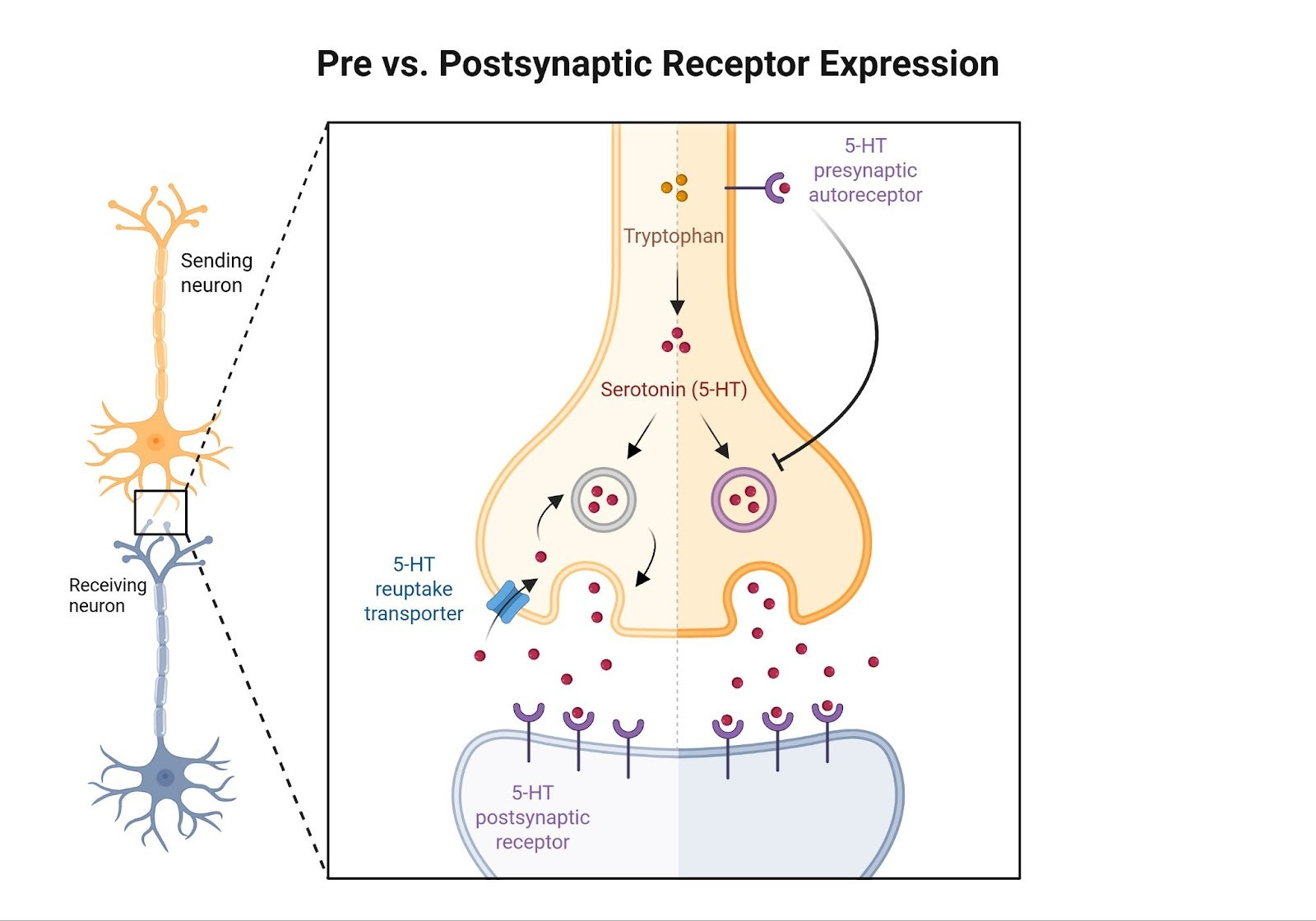
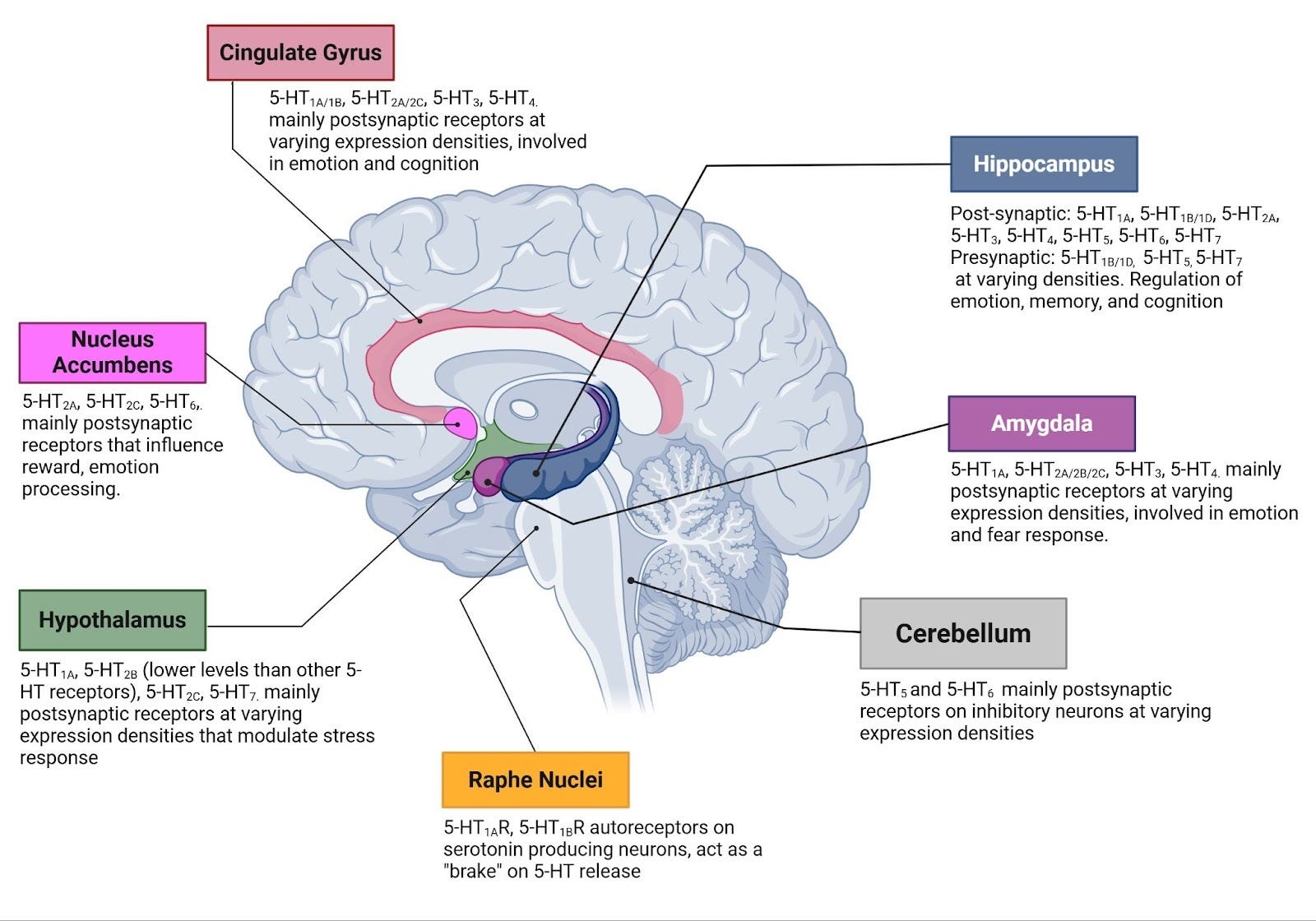
The complexity doesn’t stop there. Serotonin receptors are expressed across diverse brain regions and cell types (Frazer et al., 1999; Salvan et al., 2022; Jaster & Gonzalez-Maeso, 2023). There is a delicate balance between activation and inhibition depending on cellular context, moderating mood, emotion, cognition, plasticity, and memory. It’s important to know that it’s not just the brain regions that determine function.
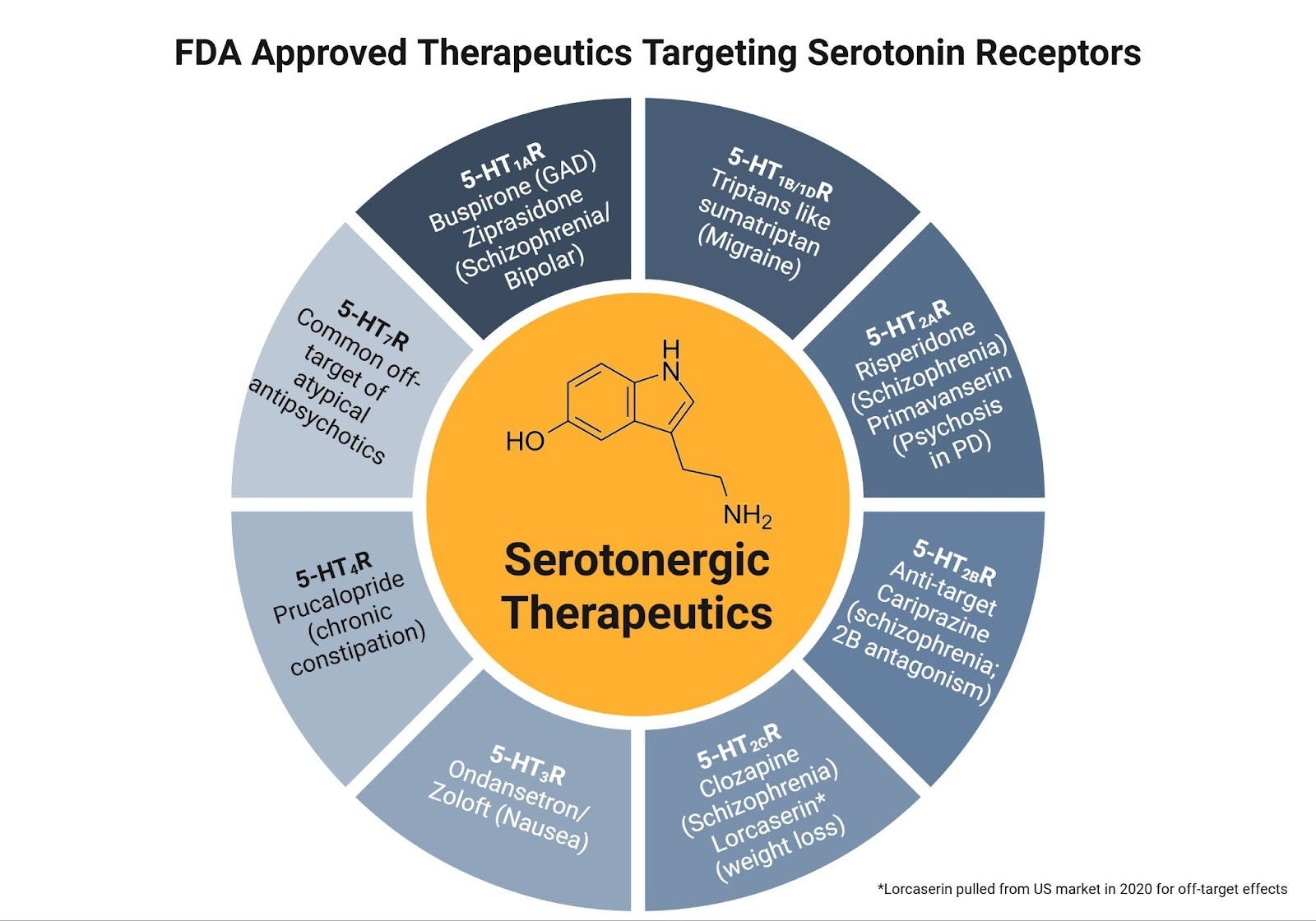
Many FDA-approved drugs leverage this biology, targeting 5-HT receptors as antipsychotics, antidepressants, antiemetics, and migraine medications. However, most antidepressants act broadly on the whole serotonin system, rather than targeting a single receptor subtype. There can also be anti-targets for drug development. For example, many psychedelics have off-target effects at the 5-HT2B receptor, where activation is linked to cardiac valvulopathy, potentially limiting the use of widespread classical psychedelics in the clinic. Precision targeting remains a major opportunity for drug development.
New Mechanistic Insights into 5-HT2A Receptor Signaling
The 5-HT2A receptor is central to psychedelic pharmacology and emerging neuropsychiatric drug development. This receptor is widely distributed in the central nervous system, but is densely expressed in the cerebral cortex on excitatory pyramidal cells and inhibitory interneurons. Even with the same receptor, cellular context can produce different signaling processes.
For example, the 5-HT2A receptor is coupled to the Gq/11 protein, where activation on an excitatory neuron increases excitation but on an inhibitory neuron the activation increases inhibition. So the same receptor can produce opposite circuit-level outcomes based on cell type.
Recent work by the lab of Dr. Omar Ahmed at University of Michigan examined these nuances using mechanistic neuropharmacology.
While psychedelic effects are largely attributed to postsynaptic 5-HT2AR on cortical pyramidal neurons, CRISPR-based studies (Elkins et al) show that presynaptic 5-HT2AR receptors in the thalamus projecting to cortical regions also contribute to neuroplasticity.
This suggests that:
- Plasticity mechanisms are not confined to one brain region.
- Circuit specific receptor expression may influence therapeutic potential
- Less-studied brain regions may provide insight into diseases within circuitry like Alzheimer’s disease or other neuropsychiatric conditions.
This is why receptor localization and cell-specific expression are not academic details. They are foundational for rational therapeutic development.
Why this matters…
At Xylo Bio, we’ve built a screening and discovery platform designed to yield unique and specific pharmacology informed by advances in mechanistic neuroscience over the last decade.
Our first Development Candidate is selective for the 5-HT2A receptor, demonstrating:
- Favorable cellular signaling profiles
- Positive outcomes in behavioral outcomes in preclinical models,
- Absence of risk-limiting effects associated with classical serotonergic psychedelics
As neuroscience and technology converges, the ability to precisely dissect receptor signaling and circuit engagement is no longer aspirational — It is actionable.
XYLO BIO UPDATES:
Scientific Leadership
- Our team has grown! Our clinical advisory board now features leaders in neuropsychiatry and translational medicine. To see all of the Xylosiders on the advisory board, please visit our Team Page.
- We welcomed a new Business Development Intern from NYU Stern, Menghan Zhang! She is an MBA candidate with experience in finance and strategic transformation and is currently working on Business Development through the NYU Endless Frontier Lab Program.
Collaborations and Thought Leadership
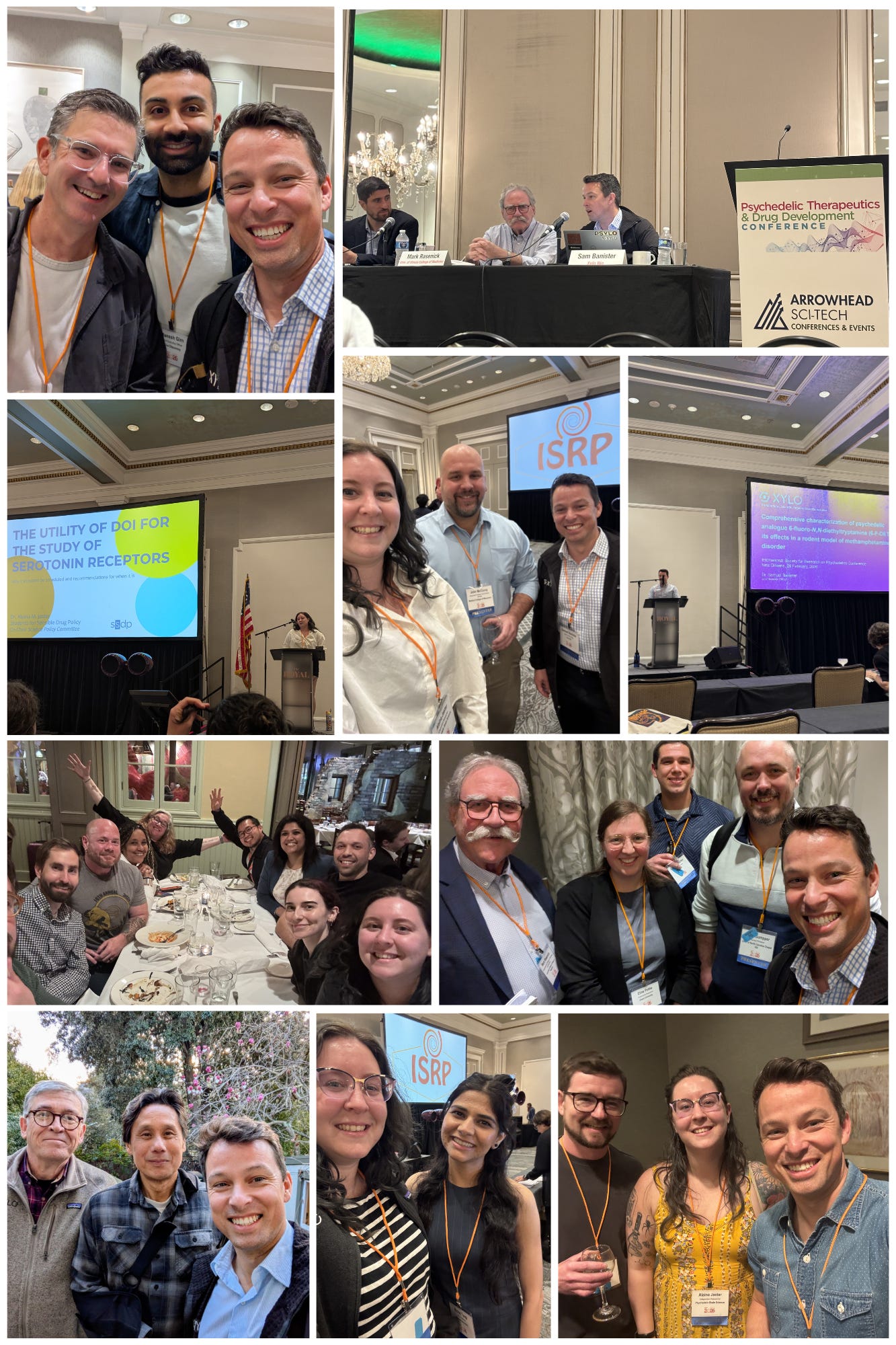
- Dr. Sam Banister (CSO) moderated a panel on biomarker guided research alongside Dr. Mark Rasenick (CSO of PAX Neuroscience, Inc.) and Dr. Ryan Field (CEO of Kernel) at the Psychedelic Therapeutics and Drug Development Conference.
- Dr. Sam Banister (CSO) presented data from our collaboration with USyd Pharmacologist, Dr. Nick Everett at the International Society for Research on Psychedelics (ISRP).
- Dr. Alaina Jaster (Head of Comms) presented on DOI, and its impact on preclinical research at ISRP.
- In Xylo Bio’s recent Targeted Neuro Talks, Dr. Sam Banister chatted about the role of pre vs. postsynaptic 5-HT2A receptors, with neuroscientist, Dr. Omar Ahmed:
Coming Up:
Find members of the Xylo Bio team traveling around the globe in the coming months:
- Sachs Neuroscience Innovation Forum (Virtual, March 10-12) - Samantha Rector (VP of Business Development) will be attending.
- Roses for Ann Shulgin Foundation Event (Lafayette, CA, March 22) - Samantha Rector will be attending.
- Octane Neurotech Forum (Orange County, CA, March 26-27) - Samantha Rector will be attending and participating on multiple panels.
- Asilomar for the Brain and Mind (Pacific Grove, CA, March 29-April 1) - Samantha Rector will be attending and hosting an investor workshop.
- Xylo Bio Labs Visit (Sydney, Australia, April 27- May 1) - Dr. Sam Banister will be visiting the Xylo Bio labs in Sydney and catching up with the Research & Development team.
Photos
RESEARCH UPDATES: Science Shaping the Future of Neurotherapeutics
This month’s emerging literature demonstrates the same principles driving Xylo’s strategy: mechanism-guided design, rigorous biological investigation and clinically scalable innovation.
Preclinical Research
- Acetylcholine boosts dopamine activity during reward processing | The brain releases dopamine during and after specific tasks that are rewarding. This release of dopamine is typically in the nucleus accumbens, or the brain’s reward center. This study found that local interactions with neurotransmitters like acetylcholine were able to amplify dopamine release during effort-dependent boosts in neurotransmission. Nature.
- Cortical organoids used to understand goal-directed learning | In this study, researchers used human cortical organoids, or “mini brains,” to determine whether they can undergo goal-directed learning. When connected to a virtual task through patterned electrical stimulation, they found the organoids adapted neural activity over time, which the authors interpret as a form of learning driven by activity-dependent network changes. Cell Reports.
- AI models vary in accuracy for predicting psychedelic pharmacology | With the rise in artificial intelligence (AI) being used in drug design, this study evaluated AI methods and their ability to predict psychedelic activity at the 5-HT2A receptor. They compared AI-based modeling tools with traditional physics-based docking and real experimental structures, and found that AI approaches varied in accuracy and were not outperforming standard methods. This work highlights both the promise and current limitations of AI for drug discovery. AI Chemistry.
- Drug screening for polypharmacology identifies dual-acting compounds for analgesic indications | Researchers screened 900 million molecules to find single drugs that could act on pairs of pain-related targets containing α2A adrenergic receptors, the serotonin transporter (SERT), and μ-opioid receptors (MOR). They identified dual-acting compounds—especially for α2A/SERT and MOR/SERT—that reduced pain in mice without signs of addiction and also showed antidepressant- and anxiety-like benefits. However, improving the drugs’ potency remained challenging despite accurate computer modeling of how they bind their target. J. Med. Chem.
- 5-HT4 receptors reveal link between gut microbiome and anxiolytic activity | Prucalopride, a drug already approved for chronic constipation that activates 5-HT4 receptors, was found to produce rapid anxiety-reducing and antidepressant-like effects in stressed mice, showing greater improvements than a standard antidepressant. The treatment also caused changes in the gut microbiota, including restoring levels of beneficial bacteria that were reduced by stress, suggesting that prucalopride’s effects involve both brain and gut interactions and expanding knowledge on the c receptor. NPJ Biofilms Microbiomes.
Clinical Research
- Methylone related compound produces positive effects in Phase 2 clinical trial | Transcend Therapeutics published Phase 2 clinical data for TSND-201, which is the β-ketone analog of MDMA. They found TSND-201 significantly reduced PTSD symptoms compared with placebo and was generally well tolerated in adults with severe PTSD with mild and short-lived side effects. JAMA Psychiatry
- Robot-assisted techniques allow for direct administration of drugs into the brain | A large problem with translational medicine is delivery of neurotherapeutics directly to targets within the brain. In this study, five children with deadly brain tumors were involved in experimental surgery using a robot-assisted technique to place catheters in the brain and deliver the chemotherapy drug, carboplatin, directly into the tumor tissue. The procedure was safe, achieved good targeting and drug distribution, and showed signs of reducing tumor size, supporting further clinical study of this delivery approach. Oper. Neurosurg.
- Psilocybin showed symptom improvement in subset of Lyme disease patients | Some cases of Lyme Disease can result in post-treatment Lyme disease, which is a chronic syndrome resulting in pain, fatigue, changes in cognition and mood. This open-label pilot study (n=20) tested two administrations of psilocybin with psychological support to see if improvements of symptom burden in post-treatment Lyme disease. Participants showed significant benefits that were sustained through 6-months with no serious adverse events. Sci Rep.
- Blood biomarker predicts response to SSRI antidepressants | A large focus of biomedical research has been on finding predictive biomarkers for disease and treatment, furthering individualized medicine. A recent clinical study (n=91) aimed to assess CDR1as, a circular RNA in the blood, as a predictor of SSRI responders and non-responders. They found higher baseline levels of this RNA predicted response and remission with sertraline treatment, but did not predict response to placebo or other antidepressants. These findings support further development of blood biomarkers, in neuropsychiatry. Mol. Psychiatry.
- Improvements following esketamine treatment vary across sexes| In a pooled analysis of multiple clinical trials (n=5 studies) involving adults with treatment-resistant depression (n=1,016), researchers found that men and women responded differently over time to intranasal esketamine treatment combined with oral antidepressants. While both sexes improved, women showed greater decreases in overall depression scores and certain symptom improvements by later weeks, regardless of whether they received esketamine or placebo, and men showed some early benefit from esketamine. These results highlight the importance of considering sex assigned at birth when evaluating treatment effects in depression. Mol. Psychiatry.
Editorials and Reviews
- The extrapolation fallacy in unblinded psychedelic trials | The article argues that clinical trials of psychedelic drugs are often unblinded due to psychedelics’ strong psychoactive effects. This unblinding creates a risk of bias when interpreting results. This “extrapolation fallacy” means outcomes from such trials may be wrongly generalized to broader clinical use if the influence of expectations and awareness is not properly accounted for. Nat. Mental Health.
- The role of polysubstance use in the development, maintenance, and treatment of stimulant use disorders | Current FDA-approved therapies for substance use disorders are typically focused on alcohol and opioid use disorders, not stimulant use disorders. This is likely due to the co-occurring use of stimulants with other substances, making it difficult to develop specific medications. This review discusses a variety of angles that contribute to polysubstance use with stimulants from epidemiology to mechanistic studies, identifying gaps in the research and opportunities for interdisciplinary collaboration. Pharmacol. Rev.
- A neurobiological perspective on prolonged grief disorder | Much of the neuropsychiatric research focuses on depression and anxiety broadly, with only a small subset of work focusing on event-linked disorders such as prolonged grief disorder. The neural circuitry of these broader conditions and prolonged grief disorders overlaps in the mesolimbic system. This review highlights evidence of specific reward processes and emphasizes methodological limitations, suggesting further studies are needed. TINS.
- Sexual dysfunction associated with selective serotonin reuptake inhibitors in adults with depression: a systematic review and meta-analysis | This study reviewed and combined evidence from clinical trials (n=13 trials) to evaluate how commonly SSRIs cause sexual side effects in adults treated for depression (n=5,941 patients). The analysis found that SSRIs are linked with a significantly higher risk of orgasmic dysfunction and reduced sexual satisfaction compared with placebo, and there was a trend toward reduced sexual desire. These results highlight that sexual dysfunction is a frequent and important side effect for many people taking SSRIs. Eur. J. Clin. Pharmacol.
Clinical Trial Registrations
Below we highlight some of the newer clinical trial registrations via clinicaltrials.gov.
Psychobiological Study | Bipolar Disorder (N=600) | Psychobiological Markers to Improve Diagnosis and to Predict Affective Episodes in Bipolar Disorder (MoodCatcher) | Sponsor: Karolinska Institutet | NCT07427966
S-ketamine | Major Depressive Disorder (N=30) | Mitochondria Function After Ketamine | Sponsor: Sheba Medical Center | NCT07399756
Observational Follow-up | Major Depressive Disorder (N=160) | A Longitudinal Follow-Up Study on Predicting Major Depressive Disorder From Rest-Activity Rhythm Profiles | Sponsor: Chinese University of Hong Kong | NCT07388849
Jump back to:
- Science in Sixty Seconds – Exploring the last year of neurotherapeutics
- Xylo Bio Updates – Company news, progress, and highlights
- Research Updates – Summaries of recent studies shaping the field
Thanks for reading Xylo Bio’s Neuroscience Newsletter! Subscribe to stay informed.

.webp)