October 2026 Newsletter
Science in Sixty Seconds
The goal of a clinical trial is to show safety and efficacy of a treatment in the people who will eventually take it. But in neuropsychiatry, there can be problems with external validity and in turn, generalizability to patients in the real world. The gap between trial participants and real patients has led to complicated outcomes for new treatments.
The Gap
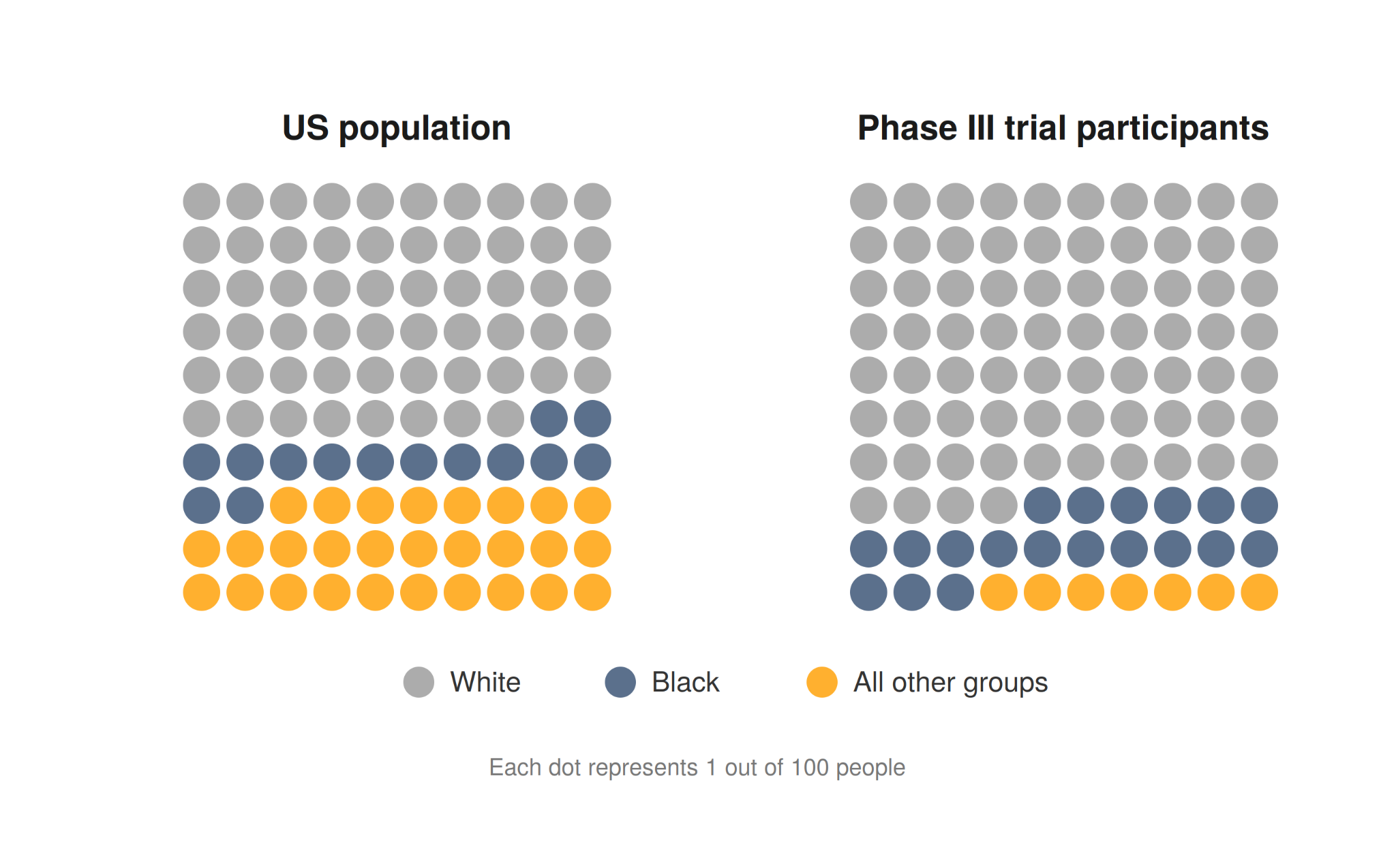
The generalizability gap isn’t just one specific variable or one specific field. In Phase 3 trials in the United States (US), white participants make up close to three-quarters of enrollees, while Asian and Native American participants account for just 3% and 1% respectively (McLaren 2024; Figure 1).
A paper analyzing 39 psychedelic-assisted therapy trials around the world, showed that pooled data from all included studies (n = 1393) found 85% of participants identified as non-Hispanic White, 2.9% as Black, 5.9% as Latinx/Hispanic, 3.2% as Asian, 1.9% as Indigenous, 3.7% as mixed race, 1.4% as other (Hughes & Romeu, 2024). Another paper examined US Food and Drug Administration (FDA) drug approval for treatments targeting heart disease, various cancers, and central nervous system disorders between 1997 and 2014. They found the white participation rate in these studies ranged from 92% to 86% despite only being 72.7% to 62.2% of the population in the US (Knepper & McLeod, 2018).
Ethnic and racial diversity in clinical trials isn’t just crucial for matching the census. It’s been demonstrated that racial minorities face unique mental health challenges in the context of race-based trauma and discrimination (Carter et al. 2020). By excluding these individuals, there is an entire population that would not know if they would benefit from a new treatment.
Age is another factor that has shown to have disparities across clinical trials, with a large focus on cancer trials. In a study analyzing over 300 clinical trials for cancer, the median trial age of participants was 6.49 years younger than the overall patient population’s age (Ludmir et al. 2019), which is estimated by the National Cancer Institute to be 66 years old. To address these disparities, the FDA shared industry guidelines for clinical trial inclusion (FDA 2022).
Sex representation has been historically difficult in clinical trials, in part due to the devastating effects of thalidomide on pregnant women in the 1950s. Thalidomide was distributed as samples in unmonitored “clinical trials” or physician giveaways and marketed as safe without undergoing proper safety trials, leading to more than 10,000 children globally to be born with severe deformities. It wasn’t until 1993 that the National Institute of Health (NIH) passed the NIH Revitalization Act which required the inclusion of women and minorities in clinical research (Liu & Mager, 2016).
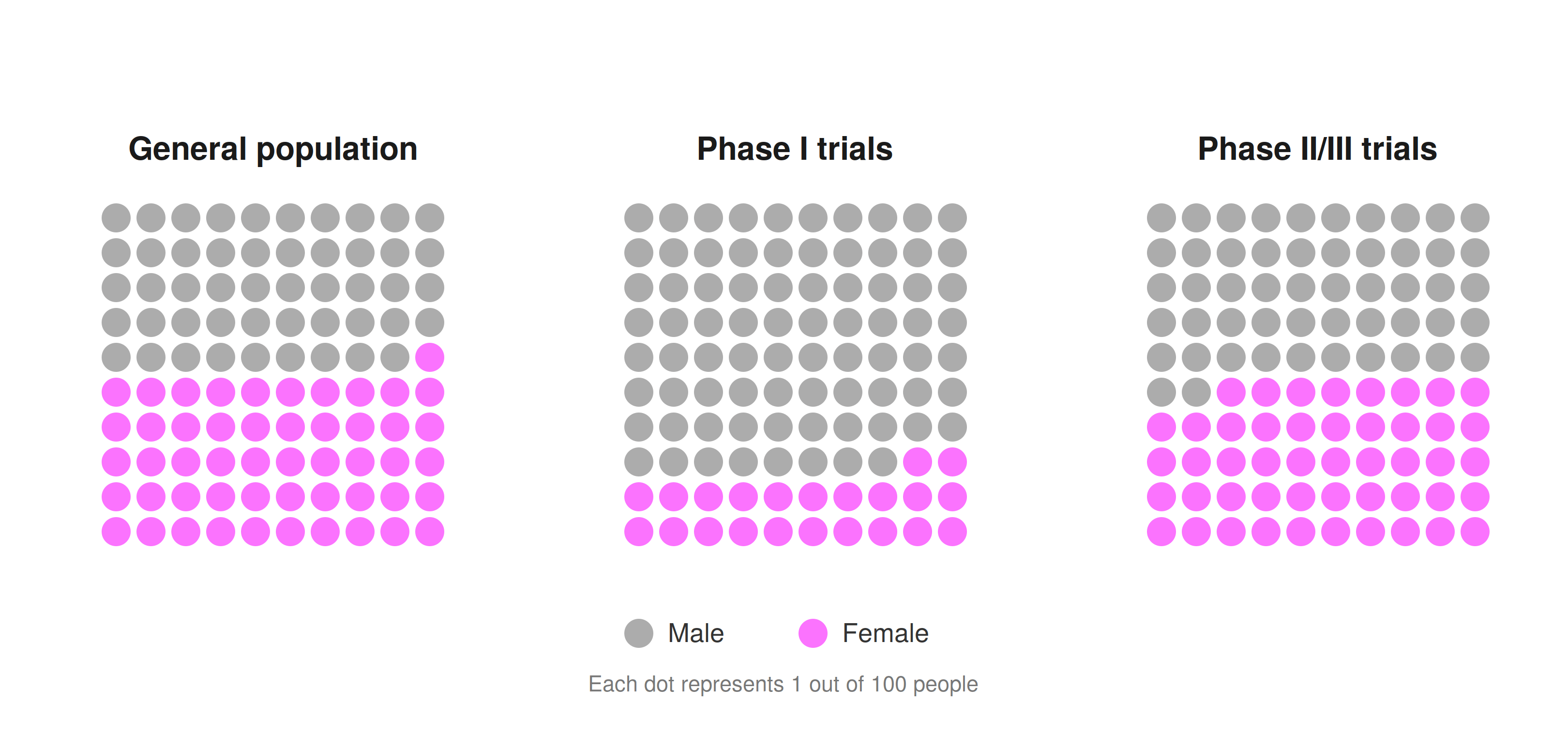
Despite progress made to ensure participant safety and include women in clinical studies, Phase I and industry-sponsored early trials continue to see lower female enrollment (often around 29% to 34%) due to strict exclusion criteria surrounding pregnancy, despite women making up 50.9% of the US population (Sosinsky et al. 2022; Figure 2). This exclusion is noticeable in post-drug approval, where women are experiencing increased side effects and less efficacy for approved drug products. For example, a study in 2020 found that differences in pharmacokinetics between men and women were associated with women having a larger number of adverse reactions to medication they were prescribed (Zucker & Prendergast, 2020).
Overall, the National Academies of Sciences, Engineering, and Medicine estimates that underrepresentation of women, older adults, and minorities in clinical research costs society an estimated $11 trillion, largely through delayed discoveries and treatments that don’t work as well as advertised once they reach the people left out of the trials (Watanabe 2024).
Neuropsychiatry Focus
While this problem isn’t unique to any one field of study, some of the biggest examples lie in the field of neuropsychiatry where treatment is already difficult due to individual differences in how conditions present, comorbidities and genetics.
Clozapine, for example, is a gold-standard treatment for schizophrenia for those who have not responded to other drugs, but its use is restricted by strict white blood cell monitoring meant to catch a rare, dangerous side effect associated with severe drops in neutrophils. The issue is the safety threshold was built on studies in predominantly white populations, but an estimated 25% to 50% of people of African ancestry naturally run lower neutrophil counts with no added infection risk. The cutoffs determined in clinical trials didn’t account for this and as a result African American patients with schizophrenia have been much less likely to receive clozapine and more likely to have it discontinued over blood counts that were never actually dangerous for them (Xie et al. 2025). The FDA didn’t adjust the monitoring threshold to accommodate this until 2015.
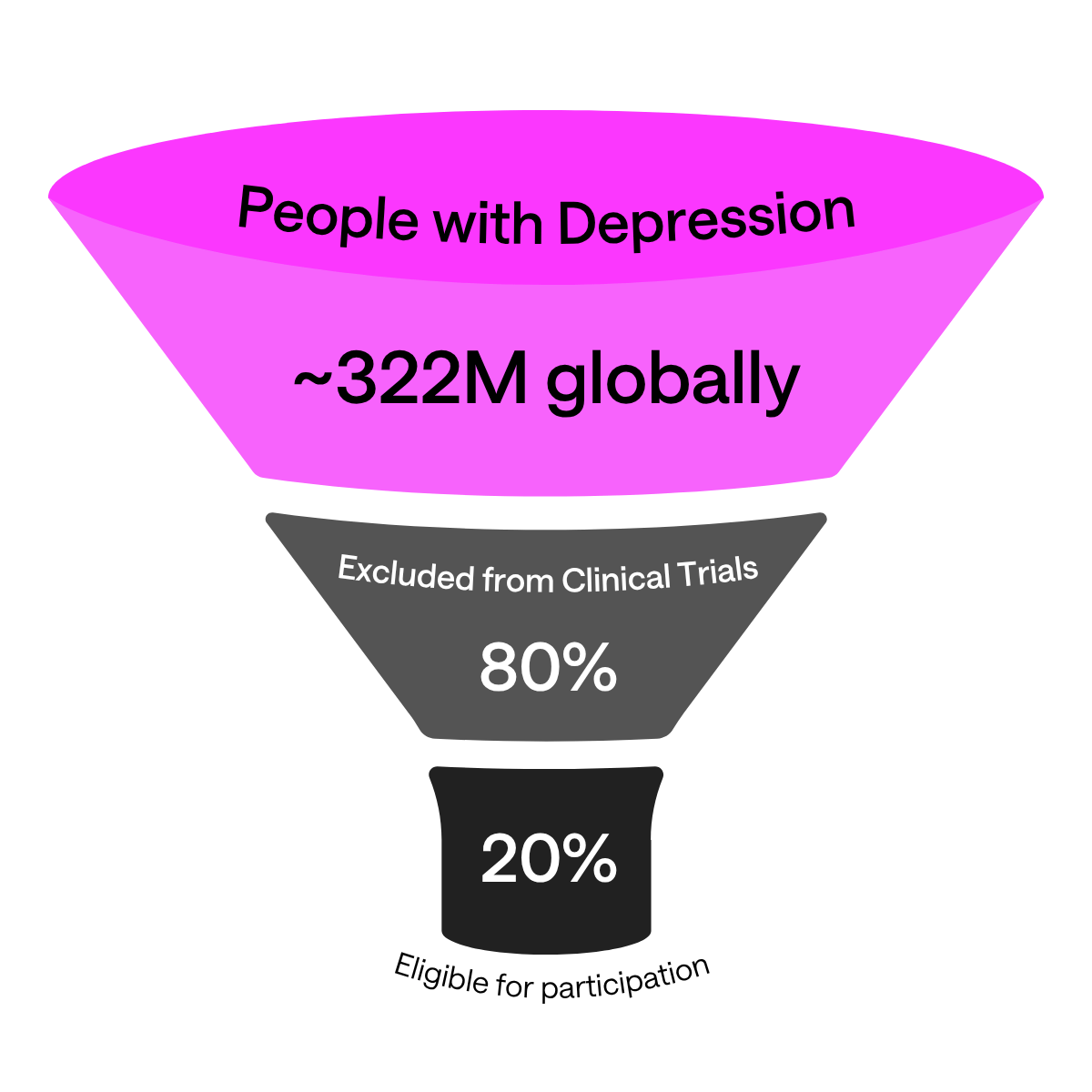
Another example is antidepressants. When researchers applied standard antidepressant trial eligibility criteria to real outpatients, they found that more than 80% of people with depression in the general population aren’t eligible for clinical trials of antidepressant drugs (Preskhorn et al. 2015; Figure 3). Trials over-select for “clean” depression without the comorbidities or complexity most real patients carry such as substance abuse, suicidal ideation and psychosis. This could be one explanation for the reduced efficacy reported for a number of patients and why so many switch or augment medications throughout their treatment (Masand et al. 2025).
Why does this keep happening?
There isn’t a simple answer, rather it’s like a giant jenga with pieces stacking on top of each other. Trial sites cluster around large academic medical centers, which tend to sit in wealthier, whiter neighborhoods, so proximity alone excludes a lot of eligible patients before recruitment even starts. Eligibility criteria are often written more conservatively than the science requires which excludes people with common comorbidities. On top of that, patients face very real practical and psychological barriers to participating: cost of travel, missed work, lack of awareness that trials exist, and especially in communities with a history of medical mistreatment, a reasonable degree of distrust in the research process (Parkhurst & Froment 2024).
What can fix it? A few approaches have real evidence behind them, rather than just good intentions:
- Decentralized trials. Bringing the trial to the patient via home visits, local labs, telehealth check-ins instead of requiring repeat trips to an academic center measurably improves participation among older adults and people who can’t easily take time off work.
- Choosing sites where the patients already are. Rather than defaulting to the usual academic centers, sponsors can deliberately select or train sites embedded in diverse communities.
- Removing practical friction. Patient concierge services, transportation and lodging reimbursement, simplified informed-consent language, and flexible scheduling all help the participant’s ability to complete a clinical trial.
- Engaging communities before the protocol is even written. Involving patient advocates and community representatives while a study is still being designed, not after enrollment stalls, helps catch eligibility criteria that will unintentionally exclude the people the drug is meant to treat.
Why this matters for Xylo Bio
As XYL-1001 advances through clinical development, we’re building diversity and representativeness into our trial design from the ground up, not as a checkbox. Our goal is to transform the lives of all patients, not just a select few. We’re committed to ensuring the patients we ultimately serve are reflected in the science that gets them there.
XYLO BIO UPDATES:
Collaborations and Thought Leadership
- Xylo Bio announced our Phase 1 clinical trial for XYL-1001, an investigational compound that is, to our knowledge, the most selective 5-HT2A agonist in development. We are currently assessing safety, tolerability and pharmacodynamic effects in healthy volunteers. To learn more, read our press release.
- Dr. Sam Banister presented a high-level summary of our XYL-1001 program at the 9th Neuropsychiatric Drug Development Summit on September 16 in Boston following our clinical stage announcement.
- Xylo Bio is participating in the #hikeOctober fundraiser to bring awareness to mental illness and raise funds for mental health research. To learn more or sponsor a hiker on the Xylo team visit our fundraising page!
- In Xylo Bio’s recent Targeted Neuro Talks, Dr. Sam Banister chatted with Dr. John Krystal, Professor of Translational Research and Chair of Psychiatry at Yale University, and a scientific advisor to Xylo Bio Pain. They talk about the history of ketamine, the future for treating depression and more./
Coming Up:
Find members of the Xylo Bio team traveling in the coming months:
- UW-Madison Psychedelic Symposium (October 29-30 Madison, WI) - Dr. Banister (CSO) and Dr. Alaina M. Jaster (Head of Comms) will be attending.
- AusBiotech Week (October 19-23, Queensland, AUS) - Josh Ismin will be attending various events throughout the week, including the TenMile FocalPoint Forum on October 19.
Photos

RESEARCH UPDATES: Science Shaping the Future of Neurotherapeutics
This month’s emerging literature demonstrates the same principles driving Xylo’s strategy: mechanism-guided design, rigorous biological investigation and clinically scalable innovation.
Preclinical Research
- Specific structural region associated with 5-HT2A vs. 5-HT2B activation | The study identified a structural region spanning ECL2 and transmembrane helix 5 (TM5) that controls the different responses of the serotonin receptors 5-HT2A and 5-HT2B. In 5-HT2A, the region is flexible and promotes receptor activation, whereas in 5-HT2B, a more rigid ECL2 helix and the F5.38 residue form an “inactive anchor” that limits activation; using this difference, the researchers developed IHCH-2330, which activated 5-HT2A while blocking 5-HT2B. Nat. Comms.
- Neural representations adapt across distinct stages of learning | The study recorded activity from 376 neurons in the lateral prefrontal cortex of two macaque monkeys as they learned a new rule-based task. The authors found that neural activity became more focused on task-relevant information as learning progressed, and that applying the learned rule to new stimuli produced more abstract neural representations. Nat. Neurosci.
- Psilocybin may have promise for treating repetitive mild head injury | Using a model of repetitive mild head injury in adult female rats, the study tested whether psilocybin could reduce brain changes associated with repeated injury. Psilocybin reduced brain swelling, restored vascular function, altered resting-state brain connectivity, and reduced phosphorylated tau buildup, while increasing BDNF and its receptor TrkB and changing lipid signaling molecules. Comms. Biol.
- Single changes to molecules improve potency but may impair pharmacokinetics | The study systematically made small, single-atom changes to 18 drug-like molecules targeting six different proteins, producing and testing 257 analogues to establish a baseline for how often random modifications improve drug potency. Of these, 29 analogues (11.3%) improved potency or affinity by at least tenfold, but these improvements often came with worse pharmacokinetic properties, highlighting the difficulty of simultaneously improving a molecule’s potency and its behavior in the body.
Clinical Research
- Cellular states of the human prefrontal cortex across the lifespan | The study profiled over 1.3 million nuclei from 284 neurotypical donors (N=284) aged 0–97 years to examine how cells in the human dorsolateral prefrontal cortex change across the lifespan. The authors found that cellular programs changed substantially during development, remained relatively stable in midlife, and showed selective reactivation in late adulthood, including glial changes related to immune activity, stress responses, and circadian rhythms. Nature.
- Glutamate signals increase in the hippocampus and PFC after SSRI treatment | This longitudinal imaging study used glutamate-sensitive MRI to compare individuals with major depressive disorder who were unmedicated (N=35) and healthy controls (N=39). At baseline, glutamate-sensitive signals were lower in the hippocampus and prefrontal cortex in the depression group, and these signals increased after SSRI treatment, with some changes associated with changes in depressive symptoms. Psychol. Med.
- EEG patterns have potential to identify responders and non-responders to agomelatine | In this open-label, randomized controlled trial (N=74), adults with schizophrenia and prominent negative symptoms received either agomelatine added to their existing antipsychotic or the antipsychotic alone for 12 weeks. EEG measures showed differences between treatment responders and non-responders, and an exploratory model suggested that baseline EEG patterns may help identify which patients are more likely to respond to agomelatine treatment. Gen. Psychiatry.
- Short-form version of the Persisting Effects Questionnaire undergoes statistical and qualitative validation | Psychedelic research has various questionnaires to understand mystical and challenging experiences, but recently researchers created and validated the short-form “Persisting Effects Questionnaire (PEQ),” The authors found that the original 140+ item questionnaire was not adequately supported by the data and developed a 14-item short form with separate positive and negative factors, plus three additional items assessing well-being and meaning. J. Psychopharmacol.
Editorials and Reviews
- Reconciling the neurogenic hypothesis of depression with recent advances in adult hippocampal neurogenesis research in humans | This review examines the evidence linking adult hippocampal neurogenesis—the formation of new neurons in the hippocampus—to depression, with particular attention to recent findings in humans. The authors conclude that immature hippocampal neurons may be especially sensitive to stress-related changes and could play a role in depression, highlighting them as a potential target for future research and treatment. Mol. Psychiatry
- Psychobiotic, nutritional, and behavioral interventions targeting the microbiome-gut-brain axis in depression, anxiety, and stress: a scoping review | This scoping review examined 30 independent human intervention studies evaluating microbiome–gut–brain axis interventions and their effects on emotional symptoms and biological markers. The most commonly studied biomarkers were gut microbiota, microbial metabolites and inflammatory markers, including IL-6, TNF-α/CRP, BDNF, serotonin-related markers, cortisol, and short-chain fatty acids (SCFAs); however, only 9 of the 30 studies directly tested whether biomarker changes were statistically associated with changes in emotional symptoms. Front. Nutr.
- Toward actionable biomarkers in psychiatry: a collaborative roadmap for precision clinical trials. An ACNP position paper | This ACNP position paper outlines a roadmap for developing clinically useful biomarkers in psychiatry, noting that most candidate biomarkers have not yet progressed beyond exploratory research. The authors highlight fluid-based, digital, electrophysiological, neuroimaging, and multimodal biomarkers and argue that large-scale data sharing, standardized methods, and collaboration among researchers, regulators, and industry are needed to develop biomarkers that can reliably identify patient subgroups or predict treatment response. Neuropsychopharmacol.
- The evolving landscape of drug targets | This review examined how the landscape of drug targets has changed over the past 25 years, finding that 1,702 drugs now act on 686 biomolecular targets as advances in genetics, genomics, proteomics, data science, and new drug technologies have expanded the range of potential targets. The authors describe how drug development has increasingly moved beyond traditional small molecules toward biologics and other therapeutic approaches, while highlighting the continued evolution of which biological targets can be effectively modified by drugs. Nat. Rev. Drug Discov.
Clinical Trial Registrations
Below we highlight some of the newer clinical trial registrations via clinicaltrials.gov.
Adalimumab (adjunct) | Phase 2 | Major Depressive Disorder (N=60) | Precision Depression Adalimumab Trial (PDAT) | Sponsor: Daniel Moriarity, University of Pennsylvania | NCT07845604
Lumateperone | Phase 4 | Major Depressive Disorder (N=30) | Lumateperone Added to Antidepressant Therapy in Adults With Major Depressive Disorder Experiencing Emotional Blunting | Sponsor: Future Options Research, LLC | NCT07824206
Ketamine (0.5 mg/kg) + BAT | Phase 2/3 | Treatment Resistant Depression (N=60) | Behavioural Activation Therapy and Ketamine for Treatment-Resistant Depression | Sponsor: The Royal’s Institute of Mental Health Research | NCT07801703
Jump back to:
- Science in Sixty Seconds – Exploring the last year of neurotherapeutics
- Xylo Bio Updates – Company news, progress, and highlights
- Research Updates – Summaries of recent studies shaping the field
Thanks for reading Xylo Bio’s Neuroscience Newsletter! Subscribe to stay informed.

.webp)