September 2026 Newsletter
Designing a scientific study is more than just coming up with a hypothesis and testing it. Each study design requires careful considerations of variables, statistical planning, and understanding of the various types of validity and reliability of the experiments chosen. For research to be translational (turning laboratory discoveries into actual treatments) it needs to meet criteria for the three main types of validity: internal, external and construct validity.
Science in Sixty Seconds
Internal Validity
Internal validity addresses whether a true cause-and-effect relationship exists within the study. Is the outcome actually from the intended intervention, or something else?
In non-clinical studies using cells and animals, internal validity ensures that observed biological changes are from the experimental intervention, not just the result of confounding variables like environment, experimenter, or technique that were not strictly controlled.
For example, the head twitch response (HTR) in mice is often used to study serotonergic compounds, and acts as a readout of 5-HT2A receptor activity induced by certain compounds. Studies have shown that when psilocybin is given the mouse has increased HTR. But, when the 5-HT2A receptor is blocked the effects of psilocybin are no longer present (Jaster et al. 2022). It is accepted that this outcome has high internal validity because it’s been demonstrated to be due to a specific mechanism and there is correlation between the potency of these substances in this assay with other species (Halberstadt et al. 2020).
In clinical studies, the randomized, placebo-controlled, double-blinded study design is the gold standard for ensuring internal validity (Hariton & Locascio, 2018). This is because it has strict controls and design to ensure the multitude of confounding variables aren’t making too much noise to make the results hard to interpret. Randomization reduces the probability that groups differ systematically at baseline, demographically matched control groups provide a comparison point that rules out other explanations related to many individual differences, and blinding prevents everyone involved from knowing the conditions which helps reduce measurement bias.
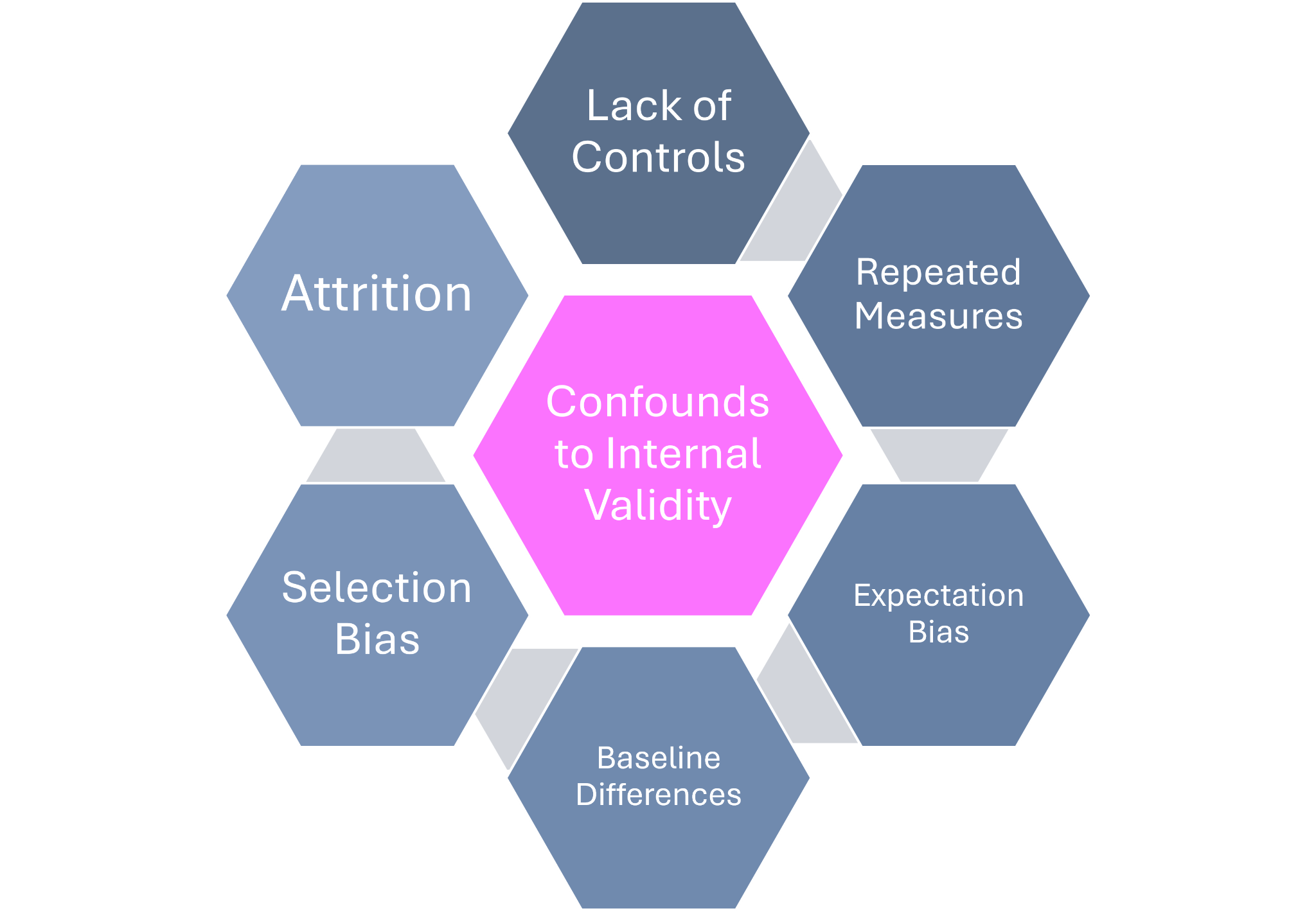
Whether it’s discovery science, preclinical testing or clinical trials, there are many things to watch out for that can be easily corrected with optimized study design (See Figure 1).
External Validity
External validity refers to how the mechanism being tested in the laboratory will generalize to other settings, time periods, or the genetically and environmentally diverse human populations. More simply, how do the results hold up outside the controlled research environment?
In basic and animal research, there have been increasing concerns over the external validity of animal models, specifically in regards to translational neuropsychiatric research (Pound et al. 2018). Animal behavior only can model specific aspects of human disease states and does not capture the complex picture of a human condition. For example, studies assessing addiction typically test the self-administration of a single substance in animals but most people who suffer from substance abuse disorders are poly-substance users (Han et al. 2026). Further, animal research has historically focused on male mice of specific species and age ranges producing homogenous samples.
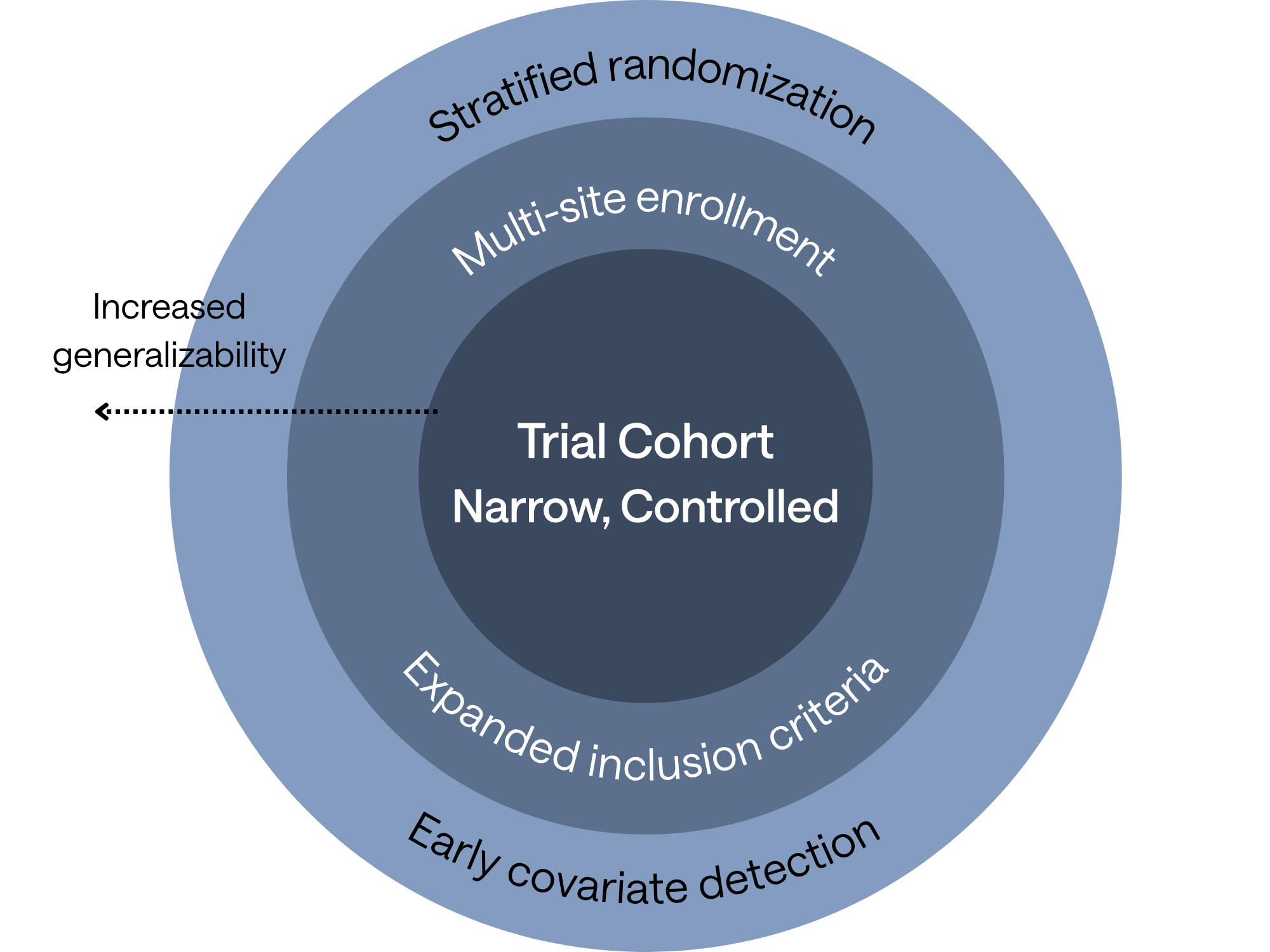
In clinical studies there are several factors that make it hard to design a study with high external validity. One is the unrealistic setting of clinical trials, which are often highly controlled academic medical centers in areas that are not always sociodemographically or racially and ethnically diverse. Strict inclusion and exclusion criteria don’t allow individuals with multiple health conditions, people who can become pregnant, or elderly patients adding another layer of complexity. The exclusion of individuals with comorbid health conditions excludes 37.2% of the global population alone (Chowdhury et al. 2023). All this said, there are several tools and designs that researchers can utilize to promote better external validity, many of which are being utilized (Jeong et al. 2020; See Figure 2).
Construct Validity
Construct validity refers to how well an experimental model or biomarker represents the biological target or human disease. Are you truly measuring the concept you think you’re measuring?
In animal models, poor construct validity is often a large issue in the translation of the research. Many models do not accurately represent the human condition or species differences make it difficult to identify complex pathophysiology. In the example above, people with substance use disorders report complex emotions associated with drug use and seeking treatment, often use multiple substances, and have comorbid diagnosis with other psychiatric disorders. These factors are difficult, if not impossible to model in animals.
Interestingly, there is one model in neuropsychiatric research that has been shown to have good construct validity: Prepulse Inhibition (PPI) of the startle response.
PPI measures sensorimotor gating, or the brain’s ability to filter out excess sensory information, by testing how much a weak stimulus dampens an animal’s startle following a more intense stimulus (Gómez-Nieto et al. 2020). Imagine you’re sitting in a library reading, someone closes a book nearby and you register the noise as no big deal (the prepulse). Then right after, a heavy book falls on the ground (the startle), if you didn’t already hear the book being closed, your brain would’ve been more startled at the louder noise (the inhibition).
Some people diagnosed with schizophrenia and other neurological disorders have trouble filtering out these background signals, making it difficult for them to discern between startling stimulus and regular everyday noise. Sensorimotor gating and PPI measures has been operationalized and studied in both human and animal models with identical approaches for over 50 years, allowing for a valid model to help patients (Geyer et al. 2001)
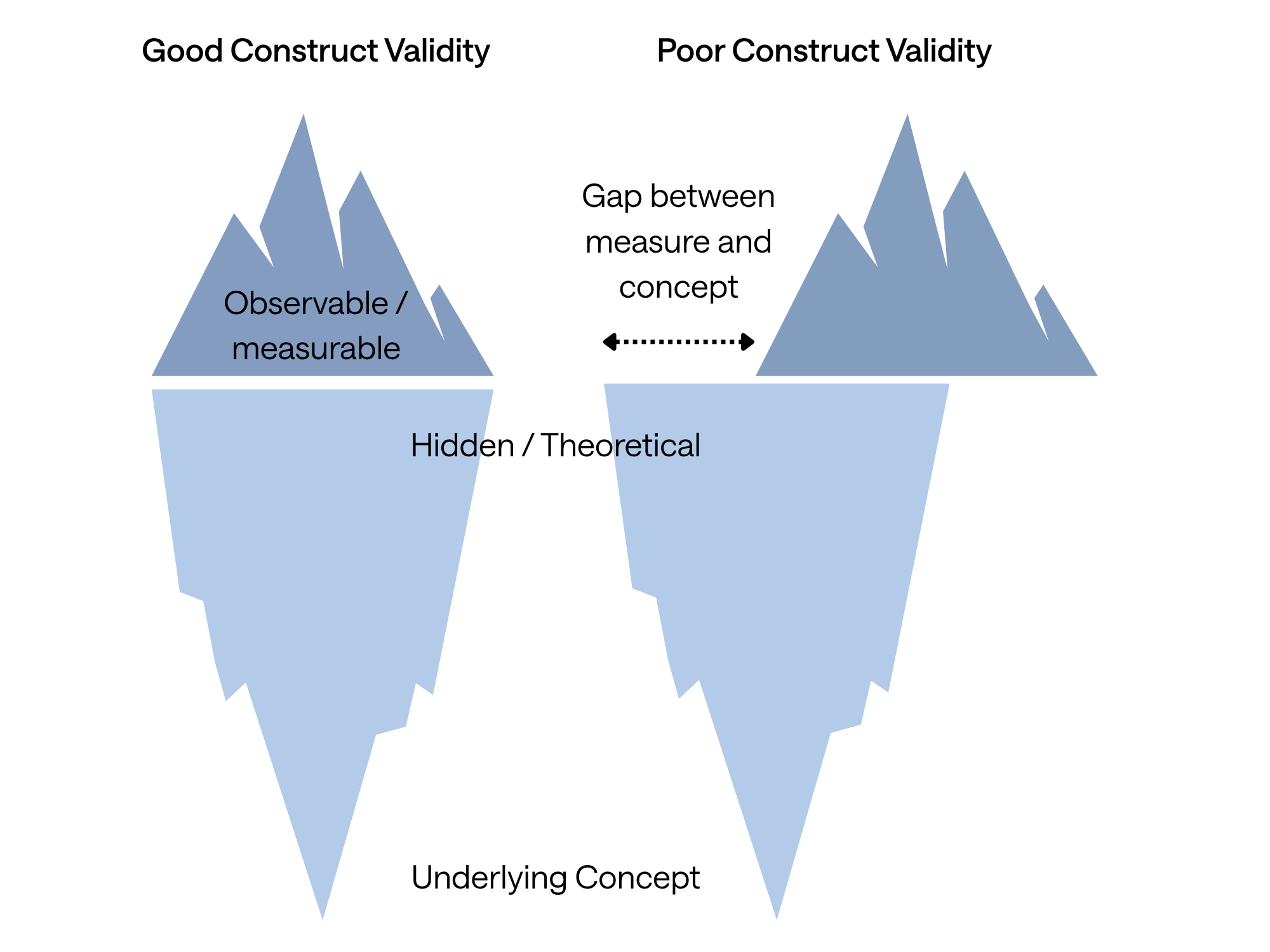
In clinical studies, using standardized and pre-validated instruments is one way to ensure greater construct validity. FDA guidance on clinical outcome assessments highlights the importance of properly validated instruments to be used to ensure standardized assessment. Using these tools ensures that differences in patient responses reflect real, clinically meaningful differences rather than variations in study design or bias (FDA; See Figure 3). This is especially important for replication and patient-centered evidence regarding novel drug products or treatments (Morga et al. 2023).
The Takeaway
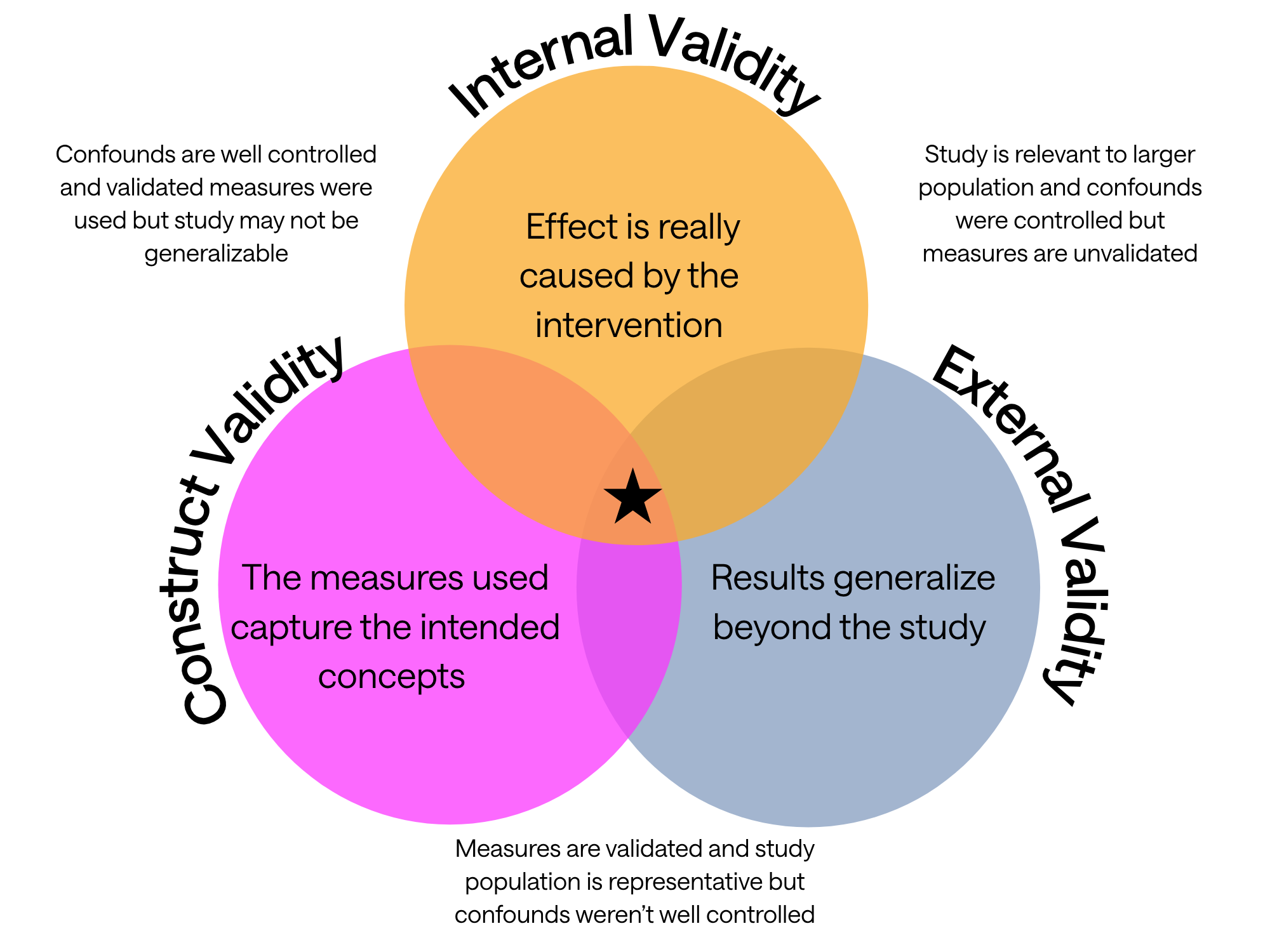
Together, these three ideas form a simple throughline: a drug’s evidence only holds together if the measurements are honest about what they capture, the causal claims are protected from bias, and the findings can be trusted to extend beyond the study itself.
Why this matters for Xylo Bio
These forms of validity aren’t abstract methodology. They show up at every stage of the pipeline. From drug discovery, to preclinical models to clinical development, Xylo Bio is constantly thinking about the best experimental design, models and translational biomarkers as we work to create the next generation of neurotherapeutics.
XYLO BIO UPDATES:
Collaborations and Thought Leadership
- Dr. Sam Banister (CSO) and Catherine Weenink (Sr. Director of Clinical Operations) visited Xylo Bio HQ in Sydney and spent some quality time with the Australian team.
- Dr. Nick Everett (Behavioral Pharmacologist and Collaborator) attended and presented at the FENS Neuroscience Forum in Barcelona, Spain.
- In Xylo Bio’s recent Targeted Neuro Talks, Dr. Banister chatted with Dr. Tess Veuthey, a Pain Management Clinical Fellow and Postdoctoral Researcher at UCSF, about an exciting clinical trial in patients with deep brain stimulation devices for chronic pain.
Coming Up:
Find members of the Xylo Bio team traveling in the coming months
- 9th Neuropsychiatric Drug Development Summit (September 15-17 Boston, MA) - Josh Ismin (President) and Dr. Sam Banister (CSO) will be in Boston September 14 to September 17. Dr. Banister will be presenting at the Summit on September 16 at 2:15pm (ET).
- UW-Madison Psychedelic Symposium (October 29-30 Madison, WI) - Dr. Banister (CSO) and Dr. Alaina Jaster (Head of Comms) will be attending.
Photos
.png)
RESEARCH UPDATES: Science Shaping the Future of Neurotherapeutics
This month’s emerging literature demonstrates the same principles driving Xylo’s strategy: mechanism-guided design, rigorous biological investigation and clinically scalable innovation.
Preclinical Research
- Phosphorylation patterns may distinguish psychedelics from non-hallucinogenic analogues | This study found a distinct pattern of intracellular protein phosphorylation that separates hallucinogenic serotonergic psychedelics from structurally similar non-hallucinogenic compounds. This includes changes in FOXK2 phosphorylation and increased lactate accumulation, suggesting differences in metabolic and signaling pathways. Transl. Psychiatry.
- TRPA1 involved in sex-dependent behaviors related to morphine withdrawal | Researchers assessed the role of the TRPA1 channel in morphine dependence and withdrawal-related negative emotional behaviors. They found that blocking TRPA1 reduced withdrawal symptoms in both sexes, while effects on behaviors such as sociability and despair-like behavior were sex-dependent, with the mesolimbic dopaminergic system and D2 dopamine receptors also implicated. Neuropharmacol.
- Intra-insular cortex has complex structure-function diversity | This study examined several pyramidal cell types to understand more about the circuit organization of the brain. They identified distinct neuronal types and found that their distribution and connectivity differed across the anterior and posterior insula, providing a detailed cellular and circuit framework for understanding how the insula integrates sensory information with emotion and behavior. Nat. Neurosci.
- Engineered mice provide better methods for understanding serotonergic compounds | This study developed a suite of genetically engineered mice to better identify and study 5-HT2A receptors. The researchers showed that these mouse models can be used to map HTR2A-expressing cells and study psychedelic-induced behavioral and neuronal changes, providing new tools for investigating the molecular and cellular mechanisms of psychedelic drugs. Nat. Neurosci.
- Non-canonical pathway for Dopamine D2 receptors revealed | This study investigated how dopamine D2 receptors regulate glutamate signaling in the nucleus accumbens, a brain region involved in reward and aversive behaviors. The researchers found that D2 receptors can directly interact with GluN2B-containing NMDA receptors to suppress their activity, selectively at thalamic inputs, providing a mechanism through which dopamine can regulate synaptic plasticity and aversive learning. Neuroscience.
Clinical Research
- Amygdala hyperconnectivity as a potential biomarker for bipolar disorder risk | This human neuroimaging study samples of young adults without bipolar disorder (n=299 total) and a separate group of participants with bipolar disorder (n=32). Using fMRI, the researchers found that increased functional connectivity between the amygdala was associated with multiple mood and cognitive risk dimensions for bipolar disorder. Biol. Psychiatry.
- TMS in specific brain regions improves symptoms of SUD | This systematic review and meta-analysis assessed 81 randomized controlled transcranial magnetic stimulation (TMS) studies in people with substance use disorders. The analysis found that TMS produced small-to-moderate improvements in craving and substance consumption compared with sham stimulation, and identified the pre-supplementary motor area, inferior frontal gyrus, and frontopolar cortex as brain regions where the strength of the induced electric field was associated with treatment effects. Biol. Psychiatry.
- Estketamine plus therapy may improve short-term outcomes | This exploratory, non-randomized, open-label clinical trial in patients with treatment-resistant depression (n=46), assessed subcutaneous esketamine either alone or combined with psychotherapy. Both groups experienced reductions in depressive symptoms, but the ketamine plus therapy group showed earlier improvement and higher remission rates at treatment completion (78.3% vs. 34.8%), but this was not maintained during the six-month follow-up. J. Affect. Disord.
- High prevalence of contraindications in veterans with PTSD should inform MDMA treatment | This national serial cross-sectional study of the U.S. Veterans with PTSD assessed potential safety considerations for MDMA-assisted therapy. Across 2018–2023, 15.3–17.3% had at least one potential contraindication, while 85.7–87.5% were taking medications with potential interactions, highlighting the need for careful screening before treatment. J. Psychoact. Drugs
Editorials and Reviews
- Experience, plasticity, and context: Beyond single-level models of antidepressant action | This perspective article examines how psychedelic antidepressant effects may arise from the interaction of receptor signaling, neuroplasticity, subjective experience, and therapeutic context, arguing that these factors should not be viewed as competing explanations. J Psychopharmacol.
- Psychedelics and the Extracellular Matrix: Rewiring Neuroplasticity and Metaplasticity for Next-Generation Psychiatric Therapies | This review highlights the extracellular matrix, specifically particularly perineuronal nets (PNNs), as an important regulator of psychedelic-induced neuroplasticity, proposing that psychedelics may temporarily loosen these structures and reopen windows of brain plasticity that could support longer-lasting therapeutic effects. Biol. Psychiatry.
- Responsible and innovative AI for mental health care: five priority themes | This review article discusses how to translate AI into mental health care. The authors identify five priorities: improving measurement and digital phenotyping, developing clinician-facing AI tools, rigorously evaluating patient-facing applications, strengthening governance and equity, and moving toward causal and mechanistic approaches to precision psychiatry. NPP DPN.
- From inflammaging to precision psychiatry: metabolic–immune crosstalk as a driver of late-life depression trajectories | This perspective proposes that late-life depression may be understood as a systems-level brain–body disorder involving interactions between chronic inflammation, metabolic dysfunction, and brain function. The author suggests that this immunometabolic feedback loop may contribute to impaired stress resilience and could help inform more personalized approaches to treating late-life depression. Neuropsychopharmacol.
Clinical Trial Registrations
Below we highlight some of the newer clinical trial registrations via clinicaltrials.gov.
Brenipatide (LY3537031) | Phase 3 | Major Depressive Disorder (N=1,000) | A Study of Brenipatide (LY3537031) in Adult Participants With Major Depressive Disorder (RENEW-MDD- 2) | Sponsor: Eli Lilly and Company | NCT07775300
BMS-986511 | Phase 2 | Major Depressive Disorder (N=200) | A Study to Evaluate BMS-986511 in Adults With Major Depressive Disorder | Sponsor: Bristol-Myers Squibb | NCT07772531
TMS + Psilocybin | Phase 2 | Post Traumatic Stress Disorder + Depression (N=150) | Assessing of Behavioral Risk and Response to Electromagnetic and Psychedelic Therapies (PRE-EMPT) | Sponsor: University of New Mexico | NCT07745569
Jump back to:
- Science in Sixty Seconds – Exploring the last year of neurotherapeutics
- Xylo Bio Updates – Company news, progress, and highlights
- Research Updates – Summaries of recent studies shaping the field
Thanks for reading Xylo Bio’s Neuroscience Newsletter! Subscribe to stay informed.

.webp)